


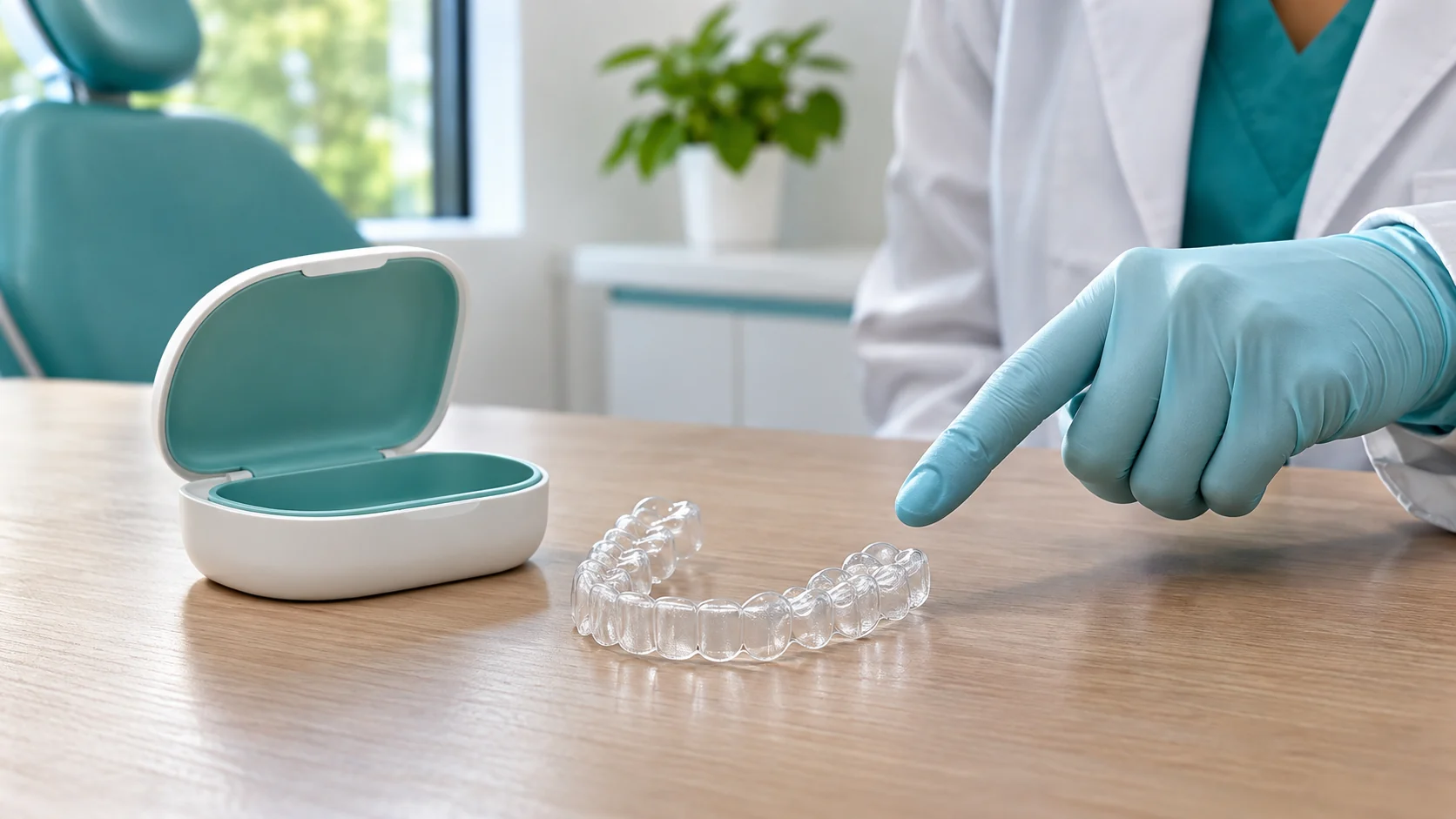
Aligner attachment fell off? Contact your orthodontist and tell them which tooth lost the small tooth-coloured bump, when it happened, and whether your tray still seats normally. Do not glue the piece back, reshape the tray, or move to a new tray early unless your treating team tells you to. Attachments help some teeth receive the planned forces, so the right next step depends on your individual treatment plan.
What is an aligner attachment?
An attachment is a small composite-resin shape bonded to a tooth. A clear aligner grips it to help direct particular tooth movements. Not every tooth needs one, and losing one attachment does not automatically mean the whole treatment has failed. It does mean your orthodontist should decide whether it needs replacing and whether your tray schedule should change. Invisalign’s patient guidance advises contacting the treating orthodontist if an attachment falls off.
Aligner attachment fell off: what should you do today?
- Check the fit gently. Look in a mirror after placing the current tray as you normally would. If it is sharp, painful, cracked, distorted, or no longer seats, stop forcing it and call your orthodontist.
- Make a note or photo. Identify the tooth or area and take a clear photo if your practice accepts one. Keep a loose fragment only if you can remove it safely; do not try to reattach it yourself.
- Contact the practice promptly. Ask whether to keep wearing the current tray and whether to delay the next tray. Your orthodontist may advise a visit to replace the attachment or a different temporary plan.
- Keep up routine care. Brush and clean between your teeth as directed; remove and replace trays according to your own treatment instructions.
Do not use household glue or an over-the-counter repair kit on the tooth. Rebonding requires the right materials, placement and clinical assessment. The American Association of Orthodontists (AAO) says problems with aligners and other appliances should be discussed with the orthodontic team; a tray that is sharp, painful or badly distorted should not be worn.
Can you keep wearing the aligner until your appointment?
Sometimes your orthodontist will tell you to continue with the current tray; sometimes a poor fit or the planned tooth movement calls for a different approach. There is no safe universal rule. Call before changing trays, especially if the aligner lifts away from a tooth, will not seat, causes new pain, or several attachments have detached. Do not force a tray into position.
Is a missing attachment an emergency?
Usually, a single missing attachment without injury is an orthodontic-office problem rather than a medical emergency. Contact the team promptly so they can judge the timing of repair. Seek urgent dental or medical help for heavy bleeding, difficulty breathing or swallowing, major facial injury, a displaced permanent tooth, or severe pain with swelling or fever. These are not routine attachment problems.
Why might an attachment come off?
Attachments can debond during normal treatment or after pressure from biting hard objects, using teeth as tools, or removing trays in a way that stresses the bond. A lost bump is not proof that you did anything wrong. Your orthodontist can examine the tooth, the tray and the attachment pattern before deciding on repair. For other appliance problems, see our guides to a loose braces bracket and a broken retainer; those appliances need different advice.
Common questions
Will one missing attachment delay treatment?
It may or may not. The answer depends on which tooth, what movement is planned and how long the attachment is absent. Your treating orthodontist is best placed to judge.
Should I switch to the next tray?
Do not advance your tray schedule on your own to compensate for a missing attachment. Ask your orthodontist first.
Can I fix the attachment at home?
No. A clinician should assess fit and bond the material in the planned position.
Sources
- Invisalign: Attachments and what to do if one falls off.
- American Association of Orthodontists: Orthodontic emergencies.
- American Association of Orthodontists: Clear aligner therapy.
By Dr. Manish Pandey, BDS, Dental Surgeon. This article is general dental education, not a diagnosis or a substitute for advice from your own orthodontist or dentist.