


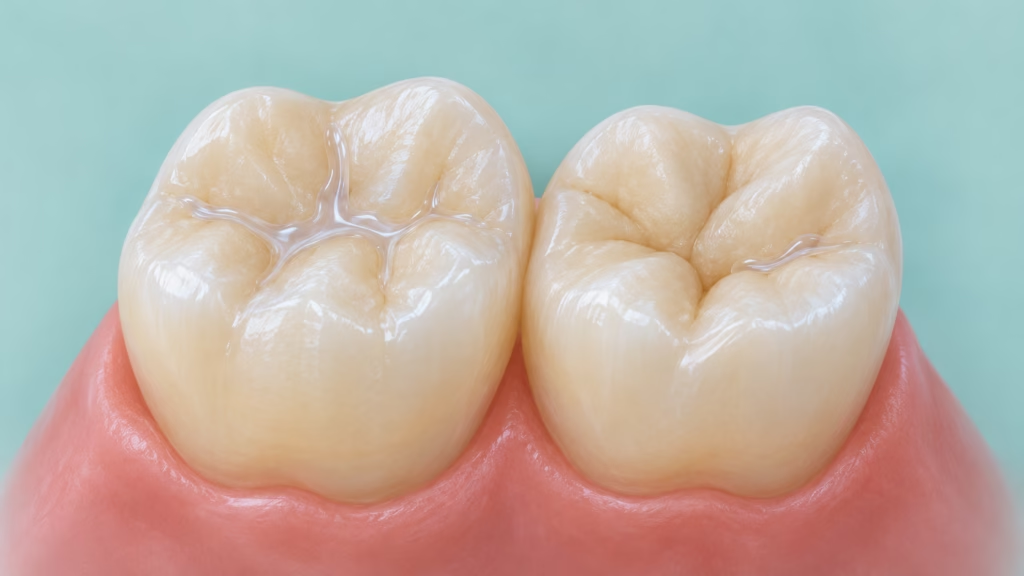
Dental sealant fell off? Keep the tooth clean and contact your dentist for an assessment. A missing or worn sealant is usually not an emergency if the tooth is comfortable, but the exposed pits and grooves may no longer have the same protective barrier. A dentist can check whether the coating needs a small repair, replacement, or no treatment at this visit.
By Dr. Manish Pandey, BDS, Dental Surgeon
What should you do when a dental sealant falls off?
First, do not try to glue or paint anything onto the tooth. Continue brushing twice daily with fluoride toothpaste and clean between the teeth as usual. If you noticed a loose flake, spit it out; do not pick at the remaining coating with a sharp object. Tell your dental team which tooth feels different and when you noticed the change. They can decide how soon to see you based on symptoms and your cavity risk.
Sealants are thin protective coatings applied to the chewing surfaces of back teeth. They cover deep grooves that are hard to clean. The CDC explains how sealants prevent cavities, while the American Dental Association reviews their clinical use.
How can you tell whether a sealant is missing?
A sealant may wear gradually or come away in a small piece, so there may be no obvious sign. You might notice that a previously smooth chewing surface feels rougher with your tongue, or your dentist may spot a gap at a routine check. A dark groove, sensitivity, or a chip is not proof that only the sealant has changed: decay, a damaged filling, or a tooth fracture can look or feel similar. Avoid self-diagnosing from a photo.
If you are unsure whether the material was a sealant or a filling, mention that when you call. A lost tooth filling may need different care from a worn preventive coating.
Does a lost sealant need replacing right away?
Not necessarily the same day. If there is no pain, swelling, visible tooth breakage, or other concerning symptom, arrange a dental check rather than treating it as an emergency. The dentist will inspect whether the sealant is partly or completely missing, look for early decay, and consider the tooth’s grooves and your individual risk. The American Academy of Pediatric Dentistry advises periodic evaluation for sealant repair or replacement; the ADA notes that a missing or worn sealant may be replaced at a regular visit.
Call sooner if there is persistent toothache, sensitivity that is new or worsening, a sharp broken edge, or a visible hole. Seek urgent dental advice for significant swelling, severe pain, or injury. Those symptoms may indicate a problem beyond sealant loss.
What will the dentist do?
Depending on the examination, the dentist may leave an intact area alone, repair the missing portion, or replace the coating. If decay has developed, a sealant alone may not be the right treatment. The decision is based on what is actually present on the tooth, not just on whether a bit of material came off. Sealants may be used on sound grooves and certain early, noncavitated lesions under professional assessment, but a cavity with a broken surface requires a different plan.
For a repair or replacement, the team cleans and isolates the tooth, prepares the surface, applies the appropriate material, and checks the bite. Keeping the tooth dry during placement helps retention. If a newly placed sealant repeatedly comes away, ask the dentist to check eruption stage, moisture control, and whether another preventive approach is more suitable.
How do you protect the tooth while waiting?
- Brush thoroughly with fluoride toothpaste twice a day; supervise children as appropriate for their age.
- Clean between teeth daily and limit frequent sugary snacks and drinks.
- Do not use household glue, nail products, or an over-the-counter filling kit to replace a preventive sealant.
- Keep the dental appointment even if the tooth feels normal, because early changes may not hurt.
A sealant complements rather than replaces everyday prevention. Read our broader guide to dental sealants for children and adults for when a dentist may recommend them.
Questions patients often ask
Can a tooth get a cavity after its sealant falls off?
Yes, the unprotected grooves can collect plaque and become vulnerable to decay, although losing a sealant does not mean a cavity is already present. A dental examination is the reliable way to assess the surface.
Can I brush over a partially lost sealant?
Yes. Gentle, thorough brushing with fluoride toothpaste is important. Do not scrape or pull on any remaining material.
Is a lost sealant the same as a lost filling?
No. A sealant is a preventive coating on grooves; a filling restores a tooth after damage or decay. If you cannot tell which was lost, contact a dentist rather than assuming it is harmless.
References
- American Academy of Pediatric Dentistry. Policy on reimbursement for dental sealants (2025).
- American Dental Association. Dental Sealants.
- Centers for Disease Control and Prevention. About Dental Sealants (2024).
Dental disclaimer: This article is general education, not a diagnosis or a substitute for a dentist’s examination. Seek individualized care for pain, swelling, trauma, or uncertainty about a lost restoration.