


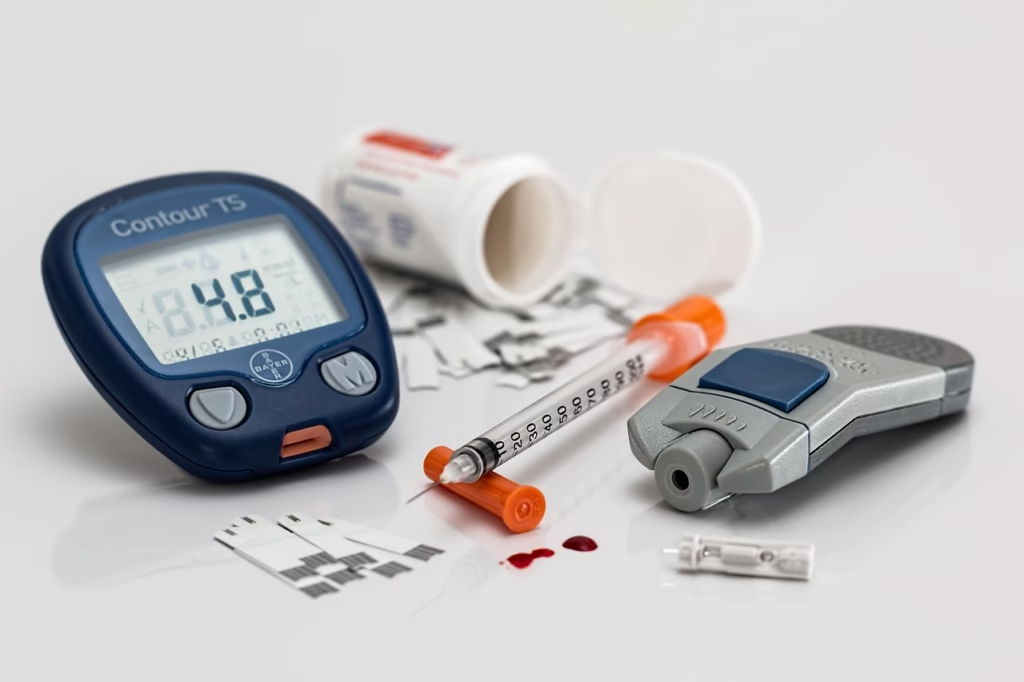
Introduction: Why Diabetes and Tooth Extraction Guide Matters
If you or a loved one is living with diabetes, the prospect of any surgery—even a common one like a tooth extraction—can feel overwhelming. You likely have questions: Will my gums heal properly? What if my blood sugar spikes during the procedure? Is there a higher risk of infection?
At SmilesCare.com, we understand that the mouth is not an isolated system; it is the gateway to your entire body. For a diabetic patient, a tooth extraction is a multidisciplinary event. It requires a harmony between your dental team, your primary care physician, and your own daily management.
This comprehensive guide is designed to walk you through the “why,” the “how,” and the “what next” of dental extractions. We take a human-centered, holistic perspective to ensure you aren’t just treated as a patient with a “problem tooth,” but as a person striving for total systemic wellness.
Part 1: The Science of the Oral-Systemic Link in Diabetes

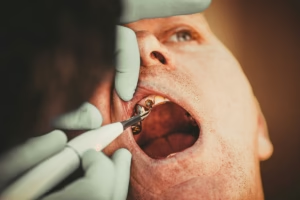
To understand why special care is needed, we must first look at how diabetes affects the biology of the mouth. Diabetes is a metabolic disorder characterized by high blood glucose. This “sugar-rich” environment changes the way your body handles trauma, such as the removal of a tooth.
The Challenge of Microvascular Health
Diabetes often leads to a thickening of the capillary walls. These tiny blood vessels are responsible for delivering oxygen and nutrients to your gums. When they are compromised, the delivery system is slowed down.
The Inflammatory Response
Diabetes often keeps the body in a state of low-grade inflammation. This means the immune system is already “busy.” When a dentist performs an extraction, the body needs to send a surge of white blood cells to the area. In a diabetic patient, these cells may be less efficient, making you more susceptible to post-operative infections.
The Saliva Factor
Many diabetic patients suffer from Xerostomia (dry mouth). Saliva is the mouth’s natural defense mechanism; it neutralizes acids and washes away food debris. Without adequate saliva, the surgical site is exposed to more harmful bacteria than usual.


Part 2: Preparation—The Secret to a Successful Procedure
A successful extraction starts weeks before you sit in the dental chair. We believe that preparation is 90% of the battle.
1. Know Your Numbers (HbA1c)
Your HbA1c provides a three-month average of your blood sugar control.
- The Safe Zone: Generally, an HbA1c below 7% is considered well-controlled.
- The Caution Zone: If your HbA1c is above 8.5% or 9%, we may recommend postponing non-emergency extractions until your levels are stabilized. High levels significantly increase the risk of the bone not healing (osteomyelitis).
2. The Pre-Surgical Consultation
We advocate for a “Team Approach.” Your dentist should communicate with your endocrinologist or GP. During this consult, we discuss:
- Current Medications: Are you on Metformin, Insulin, or SGLT2 inhibitors?
- History of Healing: Have you had slow-healing cuts or bruises in the past?
3. The Timing of the Appointment
Morning appointments may be convenient for some people because they can reduce disruption to usual meals and diabetes routines, but timing should be individualized. Follow the eating and medication plan agreed with your dentist and diabetes clinician. Do not fast or change insulin or other diabetes medicines unless the clinician managing them specifically tells you to.
Part 3: The Day of Surgery—Safety in the Chair
On the day of the procedure, transparency is key. Here is how a holistic dental practice ensures your safety during the extraction:
The Pre-Op Glucose Check
Your dental team may check your glucose on the day of treatment, especially if the procedure is lengthy or you use insulin. There is no single safe number for every patient: the dentist should consider your symptoms, usual readings, procedure, medicines and medical advice. Elective treatment may be postponed if you are unwell or your glucose is outside the individualized range set by your care team.
Managing Surgical Stress
Stress triggers the release of adrenaline and cortisol. These hormones tell the liver to release more glucose into the blood for “energy,” which causes your sugar to spike. We use gentle techniques, calming environments, and effective local anesthesia to keep your “fight or flight” response at bay.
Antibiotic Prophylaxis
Antibiotics are not routinely needed solely because a person has diabetes. Your dentist will prescribe them only when there is a clinical indication, such as an established or spreading infection, and will consider your overall health and the complexity of treatment.
Part 4: The Recovery Phase—A Diabetic-Specific Timeline
The removal of the tooth is just the beginning. The next 7 to 14 days are when the most important work happens.
The First 24 Hours: Protecting the Clot
After an extraction, a blood clot forms in the socket. This clot is a “biological bandage.”
- Diabetic Risk: If the clot doesn’t form or is dislodged, you get a Dry Socket. Because diabetics have slower blood flow, the socket is more vulnerable.
- Pro-Tip: Bite firmly on the gauze provided. Avoid spitting, smoking, or using straws.
Days 2–5: Monitoring Fluctuations
Pain and the body’s inflammatory response can actually cause your blood sugar to stay elevated for a few days post-surgery.
- Frequent Testing: You should check your glucose levels 2–3 times more often than your usual routine during this period.
- Medication Adjustment: Stay in touch with your doctor if you notice your sugar staying consistently above 200 mg/dL despite taking your usual meds.
Part 5: Nutrition and Diet for the Healing Diabetic
One of the hardest parts of a dental extraction is the dietary restriction. For a diabetic, “soft foods” often mean “high carb” (like mashed potatoes or pudding). This is a recipe for a sugar spike.
The SmilesCare Diabetic Soft-Food Menu:
To heal holistically, you need protein and healthy fats without the glycemic load:
- Silken Tofu: High in protein, very soft.
- Mashed Avocado: Full of healthy fats to keep you full without a sugar spike.
- Low-sodium broth: A gentle fluid option; allow it to cool so it does not irritate the socket.
- Unsweetened Greek Yogurt: Provides probiotics to offset any antibiotics you might be taking.
- Scrambled Eggs: The perfect soft protein.
Hydration
High blood sugar causes the kidneys to work overtime, leading to dehydration. Dehydration leads to a dry mouth. Drink plenty of plain water, but avoid acidic lemon water, which can irritate the fresh surgical site.
Part 6: Recognizing Complications
While we aim for a perfect recovery, you must be a detective for your own health. Call your dentist immediately if you experience:
- Fever or Chills: A sign of systemic infection.
- Foul Taste or Smell: This often indicates a localized infection or “Dry Socket.”
- Swelling that Increases After Day 3: Normal swelling should peak at 48 hours and then subside.
- Pus at the Site: An obvious sign of infection.
Part 7: The Holistic Connection—Why an Extraction Can Help Your Diabetes
Treating a diseased tooth removes a source of pain and infection. That supports overall health, but it does not replace diabetes treatment or guarantee lower glucose readings.
The “Two-Way Street” Theory
Chronic oral infections (like a tooth that needs to be pulled) keep your immune system in a state of high alert. This constant inflammation makes your cells more resistant to insulin.
- The result: Removing the source of dental infection allows the mouth to heal and may reduce an inflammatory burden.
- The important limit: Glucose may still rise temporarily because of pain, infection, stress or altered eating. Continue monitoring and follow your diabetes care plan.
Also Read: The Connection Between Diabetes and Gum Health
Part 8: Frequently Asked Questions (FAQ)
Q: Can I take my insulin before the extraction?
A: Do not change or skip insulin on your own. Ask the clinician who manages your diabetes for a procedure-day plan, particularly if eating will be delayed or sedation is planned. Tell the dental team what you have eaten, which medicines you took and when.
Q: Does the “numbing shot” raise blood sugar?
A: Some local anesthetics contain epinephrine (adrenaline). While the amount is very small, it can cause a minor, temporary increase in glucose. We often use non-epinephrine alternatives for our diabetic patients if they are highly sensitive.
Q: How long until I can eat “normal” food again?
A: Return to firmer foods gradually when chewing is comfortable and your dentist says healing is satisfactory. Recovery varies with the tooth, procedure and glucose control, so a fixed 7- or 10-day rule is not appropriate for everyone.
Conclusion: Empowerment Through Knowledge
Living with diabetes requires a high level of self-awareness, and dental health is no different. A dental extraction is not a “risk”—it is a managed procedure that, when done correctly, removes a burden from your body.
At SmilesCare.com, our goal is to treat the person, not just the tooth. By coordinating with your medical team, preparing your body with the right nutrients, and following a strict post-op protocol, you can ensure your extraction is a success.
Take a deep breath. You are capable of managing this. Your smile—and your total health—are worth it.
Medically reviewed by Dr. Manish Pandey, BDS. This article provides general education and does not replace individual advice from your dentist, physician or diabetes care team.