


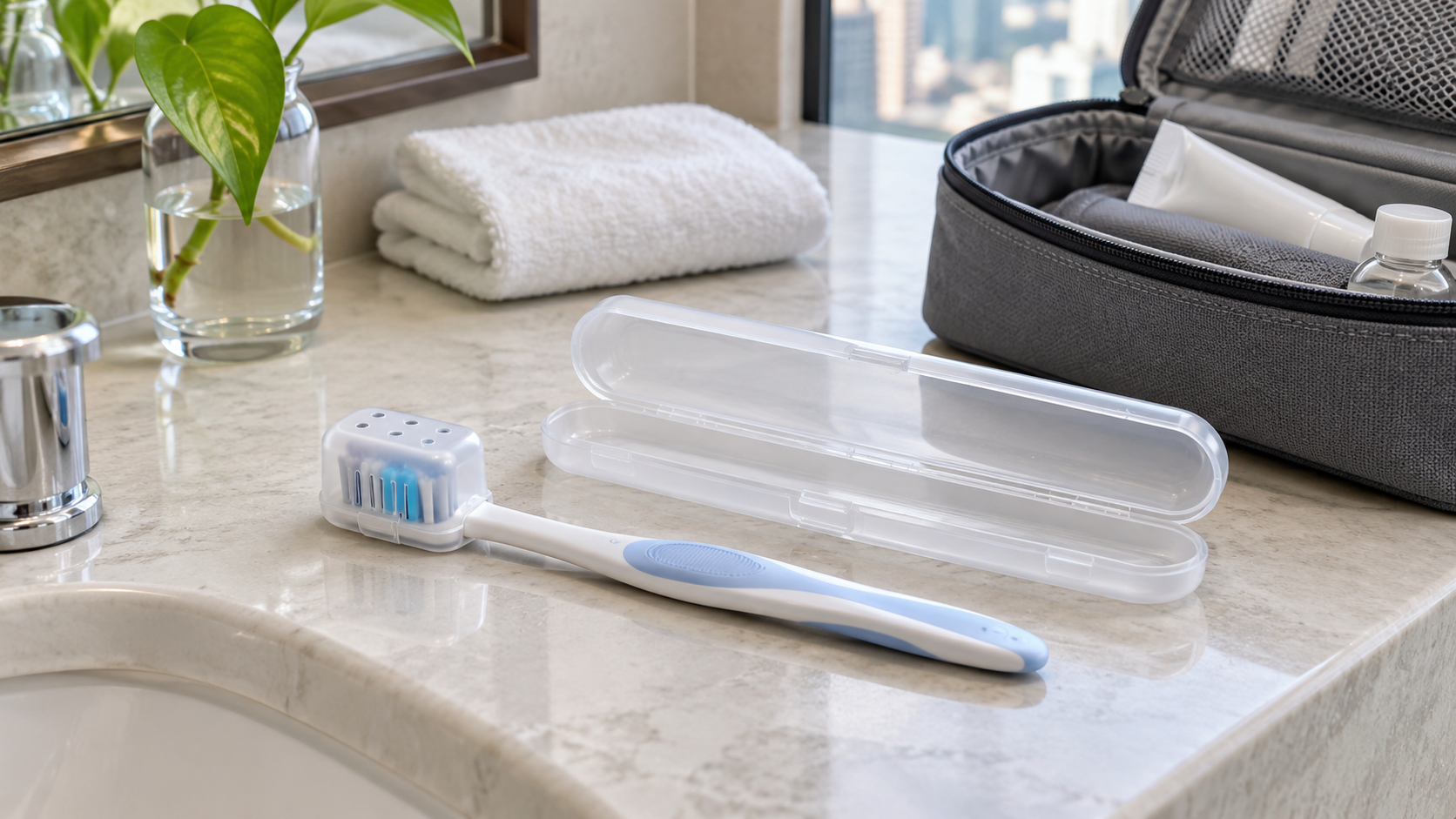
Quick answer: How to store a toothbrush while traveling depends on whether it is dry. Rinse it after brushing, shake off excess water, and let it air-dry when possible. Use a clean, ventilated cover or case during transport, then remove the cover and dry the brush at your destination.
By Dr. Manish Pandey, BDS, Dental Surgeon
How to store a toothbrush while traveling, step by step
- Rinse the bristles. After brushing, rinse away toothpaste and debris with safe water.
- Shake off excess moisture. If you have time, stand the brush upright and allow the bristles to dry before packing.
- Protect it in transit. Use a clean cover or ventilated travel case that keeps the head away from other toiletries. Avoid a loose brush in a shared bag.
- Unpack promptly. At your destination, remove the cover and keep the brush upright, separate from other toothbrushes, so it can air-dry.
- Clean the case. Rinse and dry the cover or case regularly, especially after a damp trip.
The American Dental Association (ADA) advises rinsing toothbrushes after use and allowing them to air-dry rather than routinely storing them in closed, moist containers. A cover is useful for travel, but it should not become a long-term damp storage space.
Can I pack a wet toothbrush?
Sometimes you have to pack right after brushing. Shake off as much water as possible, use a clean ventilated case for the journey, and unpack it to dry as soon as you arrive. Do not seal a wet brush in a plastic bag for days. If the bristles or case remain dirty or smell unpleasant despite cleaning, replace the brush.
Should I use a toothbrush cover on a trip?
Yes, for transport. A cover can protect the bristles from contact with luggage and other personal items. Choose one with airflow if practical. Clean and dry the cover, and take it off when the brush can be stored safely in an upright position. Do not let multiple brush heads touch inside a shared holder.
What if the water at my destination is unsafe?
Follow local drinking-water advice. If tap water is not considered safe to drink, use bottled or otherwise safe water for rinsing your toothbrush and brushing. Do not assume hotel bathroom water is safe because it looks clear. The ADA’s travel guidance also recommends keeping your toothbrush protected during transport and letting it dry at your destination.
How should I store an electric brush head?
Apply the same basic principles to a detachable electric brush head: rinse it, let it dry, and keep it protected during travel. Check the manufacturer’s instructions for the handle, charger and case. Avoid packing a damp brush head in a sealed compartment for an extended period.
When should I replace a travel toothbrush?
Replace a toothbrush or brush head about every three to four months, or sooner if the bristles are frayed or matted, according to the ADA. A travel toothbrush is not exempt. Replace it sooner if it has been visibly contaminated or damaged and cannot be cleaned adequately. A brush with splayed bristles may not clean effectively.
How can I keep up my routine away from home?
Pack a soft-bristled toothbrush, fluoride toothpaste, and the interdental cleaning tool you normally use. Brush twice a day and clean between teeth daily. If you share a bathroom with others, label and separate brushes; do not share a toothbrush. Our toothbrush-sharing guide explains why. For an unexpected tooth problem during a trip, see our separate travel dental-emergency guide.
References
- American Dental Association: Toothbrushes
- American Dental Association MouthHealthy: Travel tips
- American Dental Association MouthHealthy: Oral health recommendations
Dental disclaimer: This article is general educational information and does not replace advice from your dentist. If you have special oral-care needs or an active dental problem, seek individualized guidance.
AI-generated illustration for educational purposes only.