


By Dr. Manish Pandey, BDS, Dental Surgeon
If your implant healing cap fell out, keep the loose part in a clean container and contact the dentist or surgeon who placed it promptly. Do not try to screw it back in, use glue, or chew on the implant site. A loose healing cap does not automatically mean the implant in the bone has failed, but a clinician needs to identify the part and check the surrounding gum and implant.
Implant healing cap fell out: what should you do first?
Quick answer: Save the part, leave the site alone, avoid chewing there, and call your implant team for instructions. Tell them when surgery took place, whether the cap is completely out or just moving, and whether you have pain, swelling or bleeding. If you cannot reach the original practice, contact another dentist who treats implants.
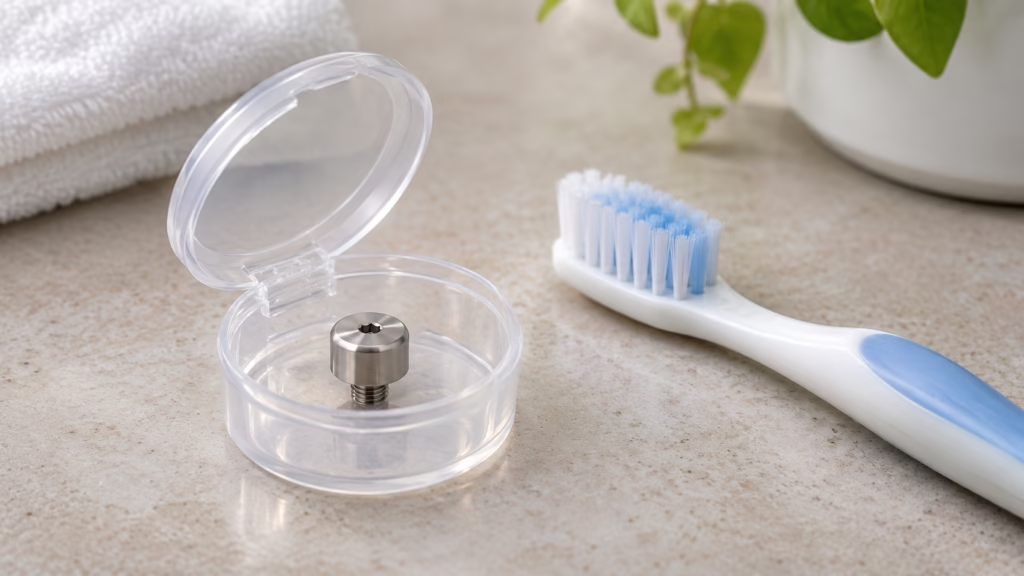
- Put the loose component in a clean, closed container and bring it to the appointment. Do not leave it loose in a pocket or tissue where it can be lost.
- Do not force it back into the opening. The clinician must check which component came out, whether tissue has changed, and how it should be secured.
- Avoid biting on that side. Choose foods that do not place pressure on the surgical area, following the aftercare instructions you were given.
- Keep the rest of your mouth clean. Clean close to the implant only as your surgeon advised; do not probe the opening with a brush, toothpick or finger.
If the cap only feels loose, do not keep testing it with your tongue. Call your implant team before it detaches or is accidentally swallowed. Hospital patient guidance lists a loose abutment as a reason to contact the surgeon.
What is a healing cap, and is it the same as the implant?
A healing cap, also called a healing abutment or healing cuff, is a temporary component attached to the implant while the gum heals. The implant fixture itself sits in the jawbone. A final abutment and replacement tooth may be fitted later, depending on your treatment plan. Some implants are covered by gum during early healing rather than having a visible cap. The stages and timing vary.
From a small piece in your hand, you may not be able to tell whether it is a healing cap, an abutment screw, a temporary restoration or part of a crown. That distinction matters. Our separate guide to a loose implant crown concerns a finished restoration, not a healing cap. Bring the component and any implant records to the appointment rather than diagnosing it from an online photo.
Does a loose healing cap mean the implant has failed?
Not necessarily. A cap can loosen while the implant fixture remains in place. Only a clinical examination can tell whether the fixture is stable and whether the gum or bone needs attention. Your dentist may assess the site, clean it, reattach or replace the correct component, and arrange follow-up. Do not assume that a cap coming out is harmless, but do not assume that it means the entire implant has failed.
Implant healing relies on the surrounding tissues as well as the fixture. Follow-up visits allow the surgical team to monitor healing and decide when a final restoration is appropriate. If you notice ongoing redness, bleeding or swelling around an implant, discuss it with your dentist; our guide to peri-implant mucositis explains one possible gum problem, but symptoms alone cannot establish a diagnosis.
When is it urgent?
Call the implant practice promptly for any loose or missing cap, even if it is not painful. Seek urgent dental or medical help for bleeding that will not stop, worsening facial swelling, fever, severe or increasing pain, or a bad taste with swelling. Difficulty breathing or swallowing is an emergency. If you think the small component was inhaled, seek emergency medical assessment rather than waiting for a routine dental visit.
Do not take leftover antibiotics or change prescribed medicines on your own. Your surgeon’s individual instructions take priority over general online advice, especially if you had a bone graft, stitches, or a temporary denture that rests near the site.
Questions people ask
Can I screw the healing cap back in myself?
No. You may have the wrong component or contaminate or damage the connection. Save the part and ask your implant clinician to examine and secure the site.
Can I wait until my next routine implant appointment?
Contact the implant team now rather than waiting weeks. They can decide how soon you need to be seen based on the stage of treatment, symptoms and appearance of the site.
Can gum grow over the opening?
Gum tissue changes as it heals. A missing cap may affect the shape or accessibility of the healing area, so timely professional advice matters. Do not try to keep the opening clear yourself.
References
- Hawaii Pacific Health: Dental Implants—Placing Abutments and Making Your Prosthesis
- Leeds Teaching Hospitals NHS Trust: Dental Implants
- European Federation of Periodontology: Dental Implant FAQs
Dental disclaimer: This article is for education, not a diagnosis or a substitute for your implant surgeon’s instructions. A clinician must identify a loose component and assess the implant site.
Featured image: AI-generated illustration for educational purposes only; the component shown is illustrative, not a photograph of a patient’s device.