

IN THIS ARTICLE
Overview
What are wisdom teeth?
What are the problems related to wisdom teeth?
Wisdom Tooth Extraction Procedure
What To Expect After Wisdom Tooth Surgery
Recovering from a wisdom tooth removal
Complications of wisdom tooth removal
Overview
Wisdom tooth extraction becomes necessary if you have an infection (Pericoronitis) or impacted wisdom teeth. An oral and maxillofacial surgeon or a dentist can remove the wisdom teeth.
Wisdom teeth are the last teeth that are present at the end of each quadrant of the dentition. The third molar is the last teeth to erupt in an individual. Usually, it comes in the occlusion between the ages of 17 to 21.
What are wisdom teeth?
As you already know, wisdom teeth erupt at age of 21. At the age of 21, there will be all 28 teeth will be present in your mouth. Many people don’t have enough room to accommodate the third molar. This can lead to a number of dental problems.

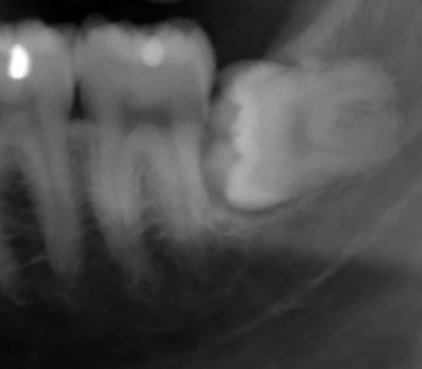
- Normal teeth can be damaged as impacted wisdom teeth push against your adjacent second molars.
- It may remain impacted in the jaw.
- Partially impacted wisdom teeth often become decayed or infected because they’re hard to reach with your toothbrush.
- Bacteria present near the teeth can cause infection.
- These bacteria can reach your heart and other organs through the bloodstream.
- Pockets can be formed to accumulate food particles causing an infection called pericoronitis.
- Fluid-filled cysts or tumors occasionally form around the impacted wisdom teeth.
Wisdom Tooth Extraction Procedure
Wisdom tooth extraction is performed by the dental practitioner at a dental clinic. The procedure of grinder extraction doesn’t take a lot of time betting on the complexness of the case similarly because of the clinical skills of the dentist at the dental clinic.
The procedure of wisdom tooth extraction


The third molar extraction procedure takes around forty-five minutes to one hour.
First, the dentist or an oral and maxillofacial surgeon at the dental clinic injects anesthesia into the patients. This will be local anesthesia, IV sedation, or general anesthesia in rare cases. Anesthesia is typically given to the patients for wisdom tooth removal procedure.
Then, the operating surgeon provides an incision around the target tooth and starts extracting the tooth. betting on the angulation of the tooth, the operating surgeon performs the surgery and eventually removes the tooth from the patient’s mouth. The bleeding is controlled with the support of medicines and a gauge.
Pain during wisdom tooth extraction:
Most people delay wisdom tooth extraction at a dental clinic because of the worry of pain during wisdom tooth extraction. In today’s time, dentistry has evolved a lot, patient comfort level during dental treatments has improved to a considerable extent.
To ensure that patients have smooth expertise during the surgery, antibiotics and related medications are prescribed to the patients for a few days before the day of the wisdom tooth removal procedure. If you continue to feel pain during the procedure, ask your dental practitioner or anesthesia to inject you additional physiological state at intervals of the recommended dosages of anesthesia.
Recovery time after wisdom tooth extraction:
On average, the recovery time after molar removal is around 3-6 days. you might notice slight bleeding after a couple of days of the procedure. after the effect of anesthesia goes off, the patient would possibly feel resistance while opening the mouth. However, this condition improves when the patient takes correct precautions after the surgery and follows the advice of the dental practitioner or operating surgeon. Thus, wisdom tooth extraction may be a helpful procedure for people who have troubles with their wisdom teeth.
What To Expect After Wisdom Tooth Surgery
In most cases, the recovery period lasts only a number of days. Take painkillers as prescribed by your dental practitioner or oral operating surgeon. the following tips can facilitate speed in your recovery.


- Bite gently on the gauze pad, and change pads after they become soaked with blood.
- Call your dental practitioner or oral surgeon if you continue to bleed from the socket twenty-four hours after your surgery.
- While your mouth is numb, take care not to bite the within of your cheek or lip, or your tongue.
- Do not lie flat. this might prolong bleeding. Prop up your head with pillows.
- Try using an ice pack on your cheek. Apply for fifteen to twenty minutes at a time for the first twenty-four hours.
- You can use moist heat—such as a face cloth soaked in warm water.
- Relax after surgery. Physical activity could increase bleeding.
- Eat soft foods, for 2 to 3 days after the surgery like gelatin, pudding, or a thin soup. Day by day adds solid foods to your diet as healing progresses.
- Do not use a straw for some days. use of straw will loosen the blood clot and delay healing.
- After twenty-four hours, gently rinse your mouth with warm salt water several times every day to reduce swelling and relieve pain.
- You can make your own saltwater by mixing one tsp (5 g) of salt in a medium-sized glass ( eight American state oz (250 mL)) of warm water.
- Don’t rinse hard. this will loosen the blood clot and delay healing.
- Do not smoke for at least twenty-four hours after your surgery. The suction motion will loosen the clot and delay healing. Also, smoking reduced blood supply to the surgery area.
- Avoid scrubbing the area with your tongue or touching it with your fingers.
- You can brush your teeth, but be careful while brushing.
- Your dentist can remove the sutures after a couple of days if needed.
Recovering from a wisdom tooth removal
It will take up to 2 weeks to totally recover after having your wisdom teeth removed.
During this time, you will experience:
- Swelling (inflammation) of your mouth and cheeks – this may be worse for the first few days, however gradually improves; gently pressing a cold cloth to your face helps to reduce the swelling.
- A stiff, sore jaw – this could wear off within seven to ten days; the skin around your jaw may additionally be contusioned for up to 2 weeks.
- Pain – this is often worse if the extraction was complicated.
- An unpleasant taste in your mouth.
- Tingling or numbness of your face, lips, or tongue (although this is often uncommon).
- You should report any excess bleeding, severe pain, or other unusual symptoms to your dentist or oral operating surgeon immediately.
Complications of wisdom tooth removal
As with any procedure, removing your wisdom teeth carries some risks. However, these risks are sometimes less common.
Risks can include:

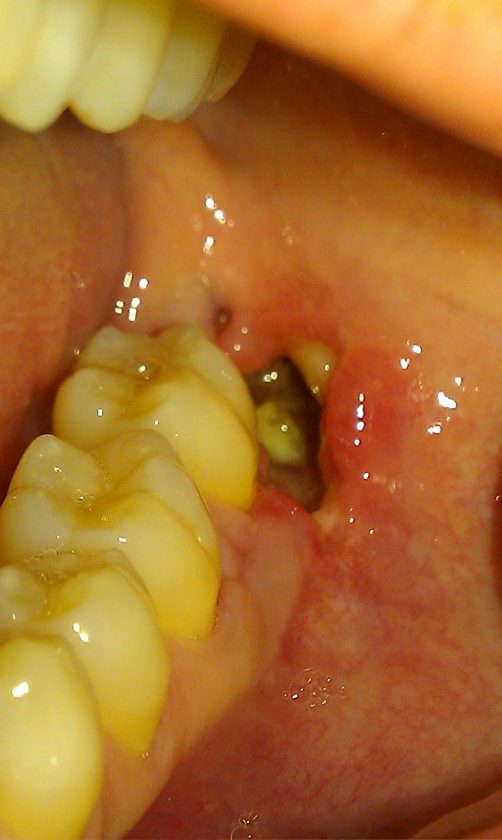
Dry socket – wherever a blood clot fails to develop within the socket, or if the blood clot becomes dislodged
Nerve injury – this may cause temporary or permanent issues, like pain and numbness
Infection – signs include a socket, yellow or white discharge from the extraction site, and persistent pain and swelling
Bleeding – You should see your dentist if you have got signs of infection after the procedure, or if you are bleeding heavily from the extraction site.
Dry socket
Dry socket (alveolar osteitis) is one of the most common complications of wisdom tooth removal. It happens when a blood clot fails to develop within the socket, or if the blood clot becomes dislodged or disappears. this may happen 3 to 5 days after surgery.
The empty socket causes an ache or throbbing pain in your gum or jaw, which may be intense. There may be an unpleasant smell or taste from the empty socket. If you inspect the socket, you may be able to see exposed bone instead of blood.
You’re more at risk of developing alveolitis if:
- You don’t follow post-extraction instructions given by the dentist.
- You smoke
- You’ve had the condition before
- You’re over twenty-five years old
- The extraction was traumatic
Contact your dentist or surgeon if you believe you have got a dry socket. they will flush any debris out of the socket or cover it with a medicated dressing, which can be removed and replaced frequently till it heals.
Nerve injury
Although way less common than the dry socket. Injury to sections of a nerve known as the trigeminus is another potential complication of wisdom tooth removal. This may cause pain, a tingling sensation, and numbness in the tongue, lower lip, chin, teeth, and gums.
In most cases, the injury is temporary, lasting for a couple of weeks or months. However, it can be permanent if the nerve has been severely damaged.
A nerve injury can interfere with your daily activities, making things like eating, and drinking tough and painful.
Every attempt will be made to minimize the chance of nerve injury when your wisdom tooth is removed. You should be told regarding the chance of complications before the procedure.
General anesthetic
It’s sometimes necessary for the anesthetic agent to be used when you have a wisdom tooth removed.
It carries some further risks, however, complications are very rare, occurring in but one in every 10,000 cases.
Read more:
Wisdom Teeth, Is It Necessary To Remove It?
Wisdom Teeth – Removal Procedure, Complications, Recovery, And Cost
Tooth Extraction Aftercare: Timeline And Guide
Tooth Extraction-Procedure, Costs, And What To Expect
How Long Does Dry Socket Last?
((https://www.nhs.uk/conditions/wisdom-tooth-removal/complications))