

Have you ever felt a sudden pain under your jaw or near your ear while eating?
Or noticed swelling in your mouth that comes and goes?
These symptoms could be linked to a condition called salivary gland stones, medically known as sialolithiasis.
Although not as commonly discussed as cavities or gum disease, salivary gland stones are a real and treatable oral health issue. The good news is that most cases can be managed effectively—especially when identified early.
Let’s understand this condition in a simple, practical, and patient-friendly way.
What Are Salivary Gland Stones?
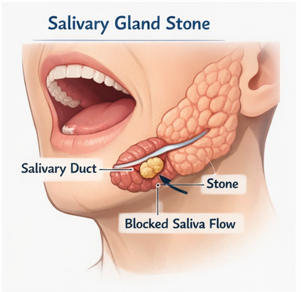
Salivary gland stones are small, hard mineral deposits (sialoliths) that form inside the salivary glands or their ducts.
These glands produce saliva, which helps:
- Keep your mouth moist
- Aid digestion
- Prevent infection
When a stone blocks the flow of saliva, it can lead to pain, swelling, and sometimes infection.
Where Do These Stones Form?
Your mouth has three major pairs of salivary glands:
- Submandibular glands (under the jaw) → most common site
- Parotid glands (near the ears)
- Sublingual glands (under the tongue)
Most stones occur in the submandibular gland because its saliva is thicker and flows upward, making blockage more likely.
What Causes Salivary Gland Stones?
The exact cause isn’t always clear, but several factors can increase the risk.
1. Reduced Saliva Flow
When saliva flow slows down, minerals like calcium can crystallize and form stones.
Common reasons include:
- Dehydration
- Certain medications
- Medicines or conditions that reduce saliva flow
2. Thick or Sticky Saliva
Some people naturally have thicker saliva, which increases the chance of blockage.
3. Salivary Stasis and Duct Factors
Stone formation is more closely linked to stagnant saliva, duct anatomy and a mineral deposit acting as a starting point. Poor oral hygiene is not considered a proven direct cause, although good oral care remains important if saliva flow is reduced.
4. Medical Conditions
Certain conditions may increase risk:
- Chronic dry mouth (xerostomia)
- Autoimmune disorders
- Previous salivary gland infections
5. Diet and Lifestyle Factors
- Low water intake
- High mineral content in saliva
- Smoking
Common Symptoms of Salivary Gland Stones
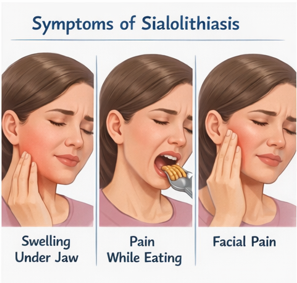
Symptoms often appear during meals, when saliva production increases.
Typical Signs Include:
- Pain in the mouth, jaw, or face
- Swelling under the jaw or near the ear
- Dry mouth
- Difficulty opening the mouth
- Bad taste in the mouth
Key Symptom Pattern
Pain and swelling often:
- Start suddenly during eating
- Reduce after some time
- Return again during the next meal
This pattern is a strong indicator of a blocked salivary duct.
When Does It Become Serious?
If the blockage continues, it can lead to infection.
Warning Signs of Infection:
- Persistent swelling
- Fever
- Redness in the affected area
- Pus discharge
- Severe pain
In such cases, prompt dental or medical care is essential.
How Are Salivary Gland Stones Diagnosed?
A dentist or doctor will usually begin with a physical examination.
Diagnostic Methods:
- Clinical examination
- X-rays
- Ultrasound
- CT scan (in complex cases)
These tests help determine:
- Size of the stone
- Exact location
- Level of blockage
Treatment Options for Salivary Gland Stones
Treatment depends on the size and severity of the stone.
1. Home Remedies (For Small Stones)
Small stones may pass on their own.
Helpful Tips:
- Drink plenty of water
- Use a sugar-free sour lozenge if suitable to stimulate saliva; avoid frequent acidic sweets if they irritate your mouth or teeth
- Gently massage the affected area
- Apply warm compress
These methods help increase saliva flow and may push the stone out naturally.
2. Medications
If infection is present, a doctor may prescribe:
- Antibiotics only when bacterial infection is suspected and prescribed
- Pain relievers
- Anti-inflammatory medications
3. Minimally Invasive Procedures
For stones that don’t pass naturally:
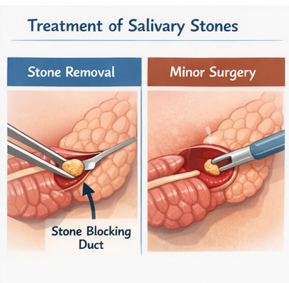
- Sialendoscopy (tiny camera + removal tool)
- Duct dilation
In suitable cases, these gland-preserving procedures are less invasive than removing the salivary gland, but benefits and risks depend on the stone’s size and location.
4. Surgical Removal
In rare cases where stones are large or deeply embedded:
- Minor surgery may be required
- In severe cases, the affected gland may need removal
However, this is uncommon and usually a last option.
Can Salivary Gland Stones Be Prevented?
While not always preventable, certain habits can reduce risk.
Prevention Tips:
- Stay well hydrated
- Maintain good oral hygiene
- Avoid smoking
- Stimulate saliva flow regularly
- Don’t ignore dry mouth
Regular dental checkups can also help detect early signs.
Are Salivary Gland Stones Common?
Yes, but they are often underdiagnosed.
They are more common in:
- Adults (especially middle-aged)
- Men slightly more than women
However, they can occur in anyone.
Key Takeaway
Salivary gland stones may sound serious, but in most cases, they are manageable and treatable.
The most important things to remember:
- Early symptoms often appear during eating
- Hydration plays a major role
- Small stones can pass naturally
- Professional care ensures proper treatment
Ignoring symptoms may lead to infection, so timely attention is important.
Frequently asked questions
What causes salivary gland stones?
They are caused by mineral buildup in saliva, often due to reduced flow, dehydration, or thick saliva.
Can salivary stones go away on their own?
Yes, small stones may pass naturally with increased saliva flow and hydration.
Are salivary gland stones painful?
They can cause pain, especially during meals when saliva production increases.
Is surgery always required?
No. Most cases are treated with simple methods or minimally invasive procedures.
How can I prevent salivary gland stones?
Stay hydrated, maintain oral hygiene, and avoid habits that reduce saliva flow.
Sources:
- Salivary gland stones – Cleveland Clinic
- Sialolithiasis- NIH
- Salivary Stones – MSD Manual Professional Edition
Reviewed by Dr. Manish Pandey, BDS. This article provides general education and does not replace an examination. Do not probe or cut a suspected stone yourself. Seek prompt care for fever, pus, worsening swelling, severe pain, dehydration, difficulty swallowing or breathing.