

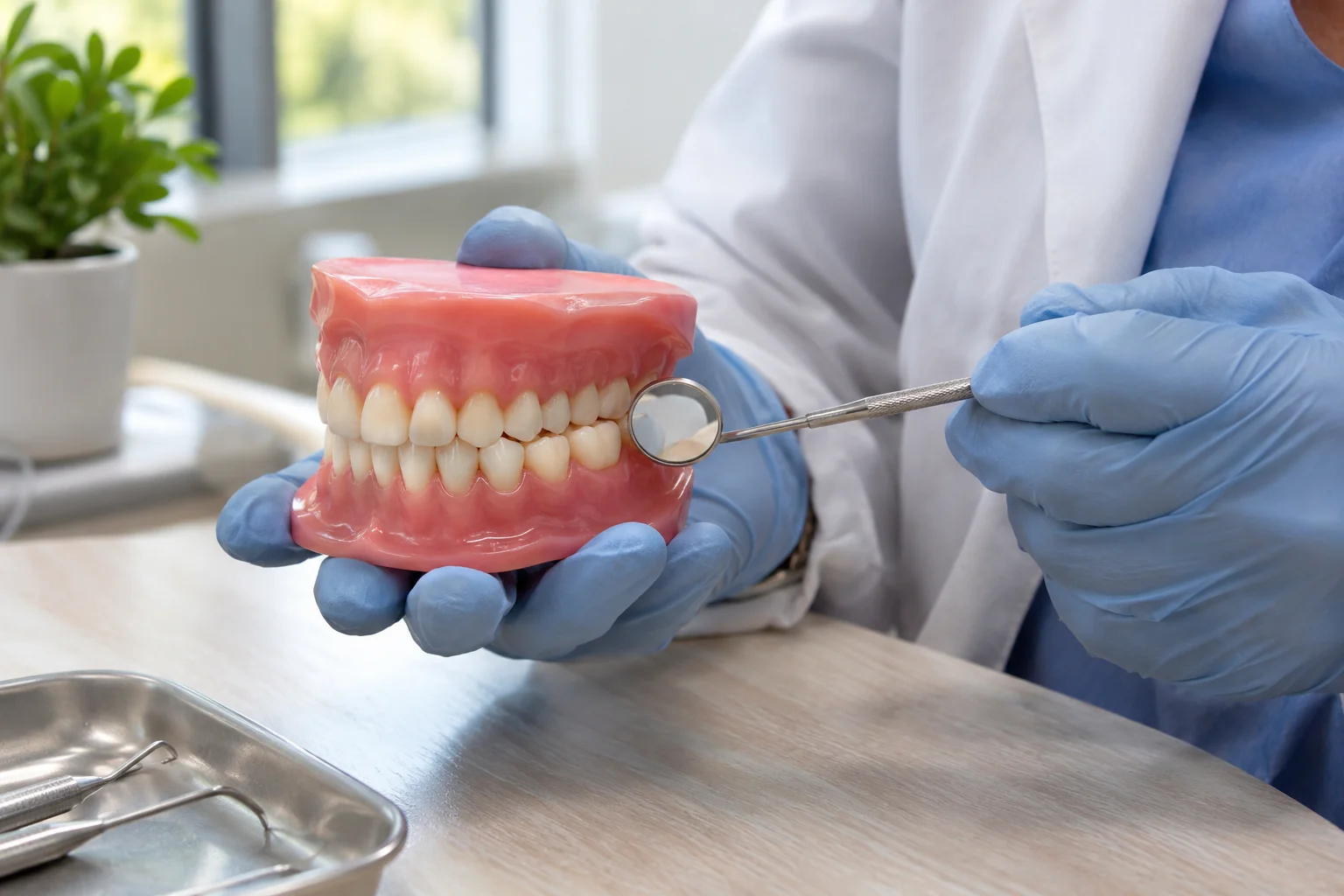
Can a root canal tooth get a cavity? Yes. Root canal treatment removes the inflamed or infected pulp and seals the canals, but the tooth’s remaining enamel and dentin can still decay. A filling or crown does not make the tooth immune to new cavities—especially around an open or damaged margin.
By Dr. Manish Pandey, BDS, Dental Surgeon
Can a root canal tooth get a cavity after treatment?
Yes. Plaque bacteria can produce acids that damage the natural tooth structure left after treatment. A crown itself cannot develop a cavity, but decay can start in the tooth beside or underneath its edge. A loose, cracked, or broken restoration may also allow bacteria to reach the root canal filling. The American Association of Endodontists identifies new decay and damaged restorations as possible reasons a treated tooth may become infected again.
Will a new cavity in a root canal tooth hurt?
Not always. Because the pulp has been removed, the tooth may not give the familiar cold or sweet sensitivity that warns of decay in an untreated tooth. Early tooth decay can also have no symptoms. Pain when biting, gum swelling, a bad taste, or a pimple-like bump near the tooth needs prompt dental assessment, but these signs are not specific to a cavity. Do not wait for pain before arranging a checkup.
How can you spot a problem around a filling or crown?
Look for a visible dark area or hole in the natural tooth, a chipped or loose filling or crown, food repeatedly trapping at one edge, or a new rough margin. None of these proves decay: staining, wear, and gum changes can look similar. A dentist will examine the tooth and restoration, and may use dental radiographs when clinically indicated to look for decay or signs of infection. A normal-looking crown can still hide a problem at its margin.
What should you do if you suspect decay?
Book a dental visit rather than trying to seal the area yourself. The treatment depends on how much tooth remains and whether the root canal seal is still sound. A small, accessible cavity may be repaired with a new restoration. More extensive damage may require a replacement crown. If bacteria have reached the canals and the tooth is restorable, the dentist may discuss endodontic retreatment; extraction is considered when a tooth cannot be predictably restored. Seek urgent dental care for facial swelling, fever, or rapidly worsening symptoms.
How do you prevent a cavity after a root canal?
- Brush twice daily with fluoride toothpaste, cleaning the gumline and the edges of any crown or filling.
- Clean between the teeth daily with floss or an interdental brush that fits comfortably.
- Limit how often you have sugary snacks and drinks.
- Keep the final restoration intact and attend regular dental reviews; contact your dentist if a crown or filling becomes loose or breaks.
The NHS tooth-decay guidance explains why plaque control and fluoride matter. The AAE post-treatment guidance recommends brushing, flossing, and regular checkups after root canal care. If your treatment is not yet complete, see our separate guide to a temporary filling after a root canal.
Frequently asked questions
Can decay get under a crown?
Yes. The crown material does not decay, but natural tooth at its edge can. A dentist should check a loose or damaged crown and any suspicious margin.
Does a cavity mean the root canal has failed?
No. A cavity can be limited to the outer tooth. Whether the canals are affected requires an examination, and sometimes radiographs.
Can I still need a filling after a root canal?
Yes. New decay in a treatable area may need a filling or a replacement restoration, even if the original root canal remains healthy.
Sources
- American Association of Endodontists: Endodontic Retreatment Explained
- American Association of Endodontists: Post-Treatment Care
- NHS: Root Canal Treatment
- NHS: Tooth Decay
Dental disclaimer: This article is general education, not a diagnosis or a substitute for an examination by your dentist. Individual treatment depends on your tooth and overall health.