

Introduction
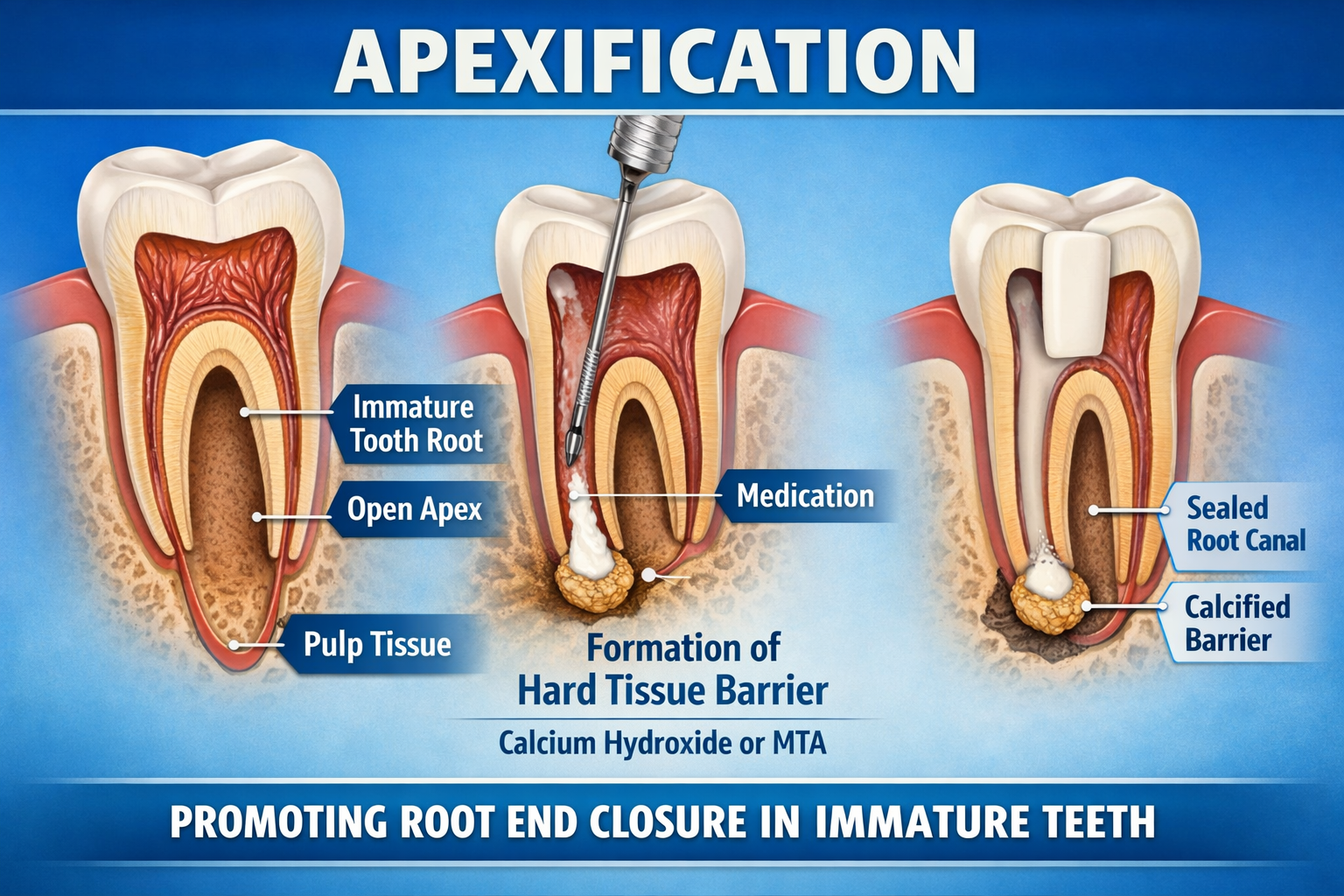
When we think of dental procedures for children, we often think of cleanings, fillings, or perhaps braces. However, there is a specialized area of dentistry dedicated to saving permanent teeth that haven’t finished growing yet. One of the most critical treatments in this field is known as apexification.
In understanding pediatric dentistry, we often ask: What is the Apexification Procedure? This is crucial for parents to know.
Understanding What is the Apexification Procedure can help in making informed decisions about your child’s dental care.
If your dentist has mentioned this term, you might be asking: What is the apexification procedure? At its core, it is a specialized endodontic treatment designed to close the end of a tooth’s root when it has stopped developing prematurely. This usually happens due to trauma or deep decay in a young person’s permanent tooth.
At SmilesCare.com, we believe in a holistic and proactive approach to pediatric oral health. Saving a natural tooth is always the priority, especially in a developing child. Let’s dive deep into understanding this procedure, how it works, and why it is a cornerstone of modern restorative dentistry.
The Anatomy of a Developing Tooth
To understand what the apexification procedure is, we first need to look at how teeth grow.
So, What is the Apexification Procedure necessary for a child’s dental health? It’s vital for permanent teeth.
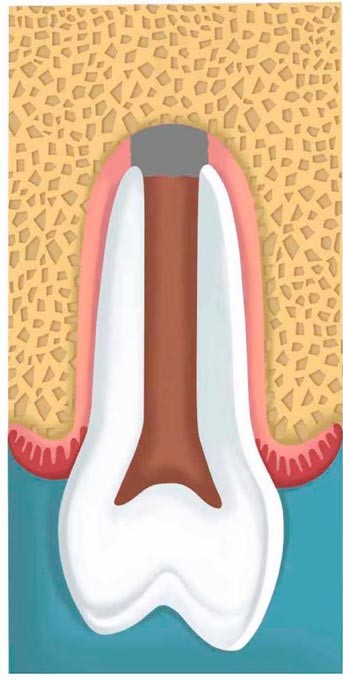
When a permanent tooth first erupts into a child’s mouth, it isn’t actually “finished.” While the crown (the part you see) is fully formed, the root is still growing. Specifically, the tip of the root, called the apex, is wide open. Over the next few years, the root continues to lengthen and the apex gradually closes, creating a narrow opening for nerves and blood vessels.
What Happens When Growth Stops?
If a child suffers a blow to the face or develops a severe cavity that reaches the dental pulp (the “living” part of the tooth), the pulp can become infected or die. Once the pulp dies, the root stops growing. This leaves the tooth with:
- Thin, Fragile Walls: The root hasn’t had time to thicken.
- An Open Apex: There is no “stop” at the end of the root, making a standard root canal impossible.
Without an apexification procedure, these teeth are often lost, leading to lifelong issues with jaw alignment and self-confidence.
What is the Apexification Procedure? A Step-by-Step Breakdown
The overarching question is, What is the Apexification Procedure and how does it benefit young patients?
The goal of apexification is to induce a calcified barrier at the end of the open root. This barrier acts as an artificial “plug,” allowing the dentist to eventually perform a standard root canal to seal the tooth permanently.
1. The Cleaning Phase
First, the dentist or endodontist removes the dead or infected pulp tissue from inside the tooth. Because the root walls are very thin, this is done with extreme care using specialized instruments and disinfecting rinses.
Therefore, knowing What is the Apexification Procedure helps in understanding the importance of tooth preservation.
2. Creating the Barrier
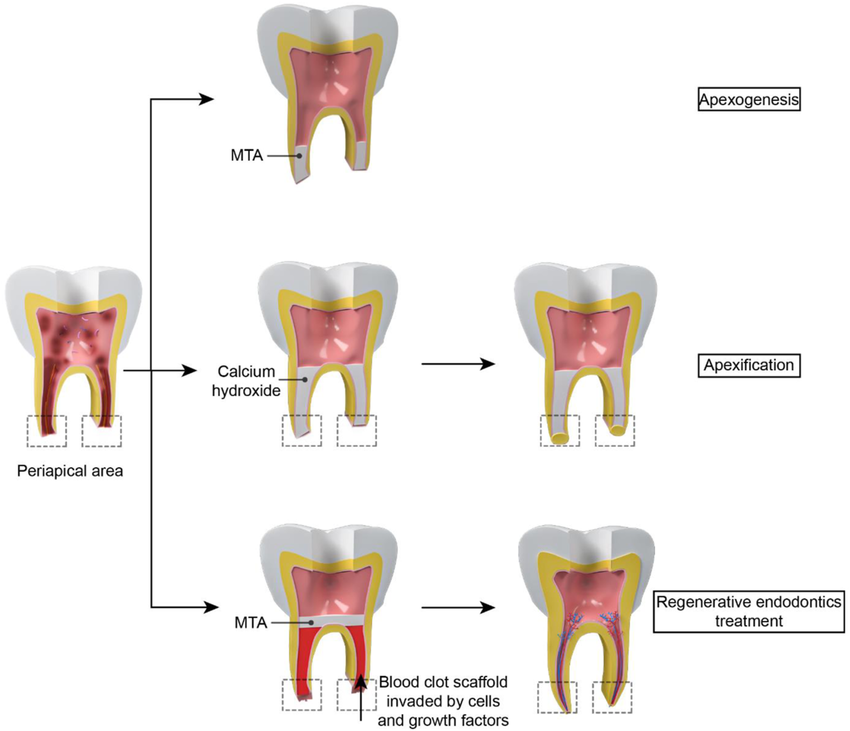
Historically, dentists used calcium hydroxide paste, which required multiple visits over many months to encourage the body to form a natural bridge. Today, we often use a “one-step” method involving Mineral Trioxide Aggregate (MTA).
- MTA is a biocompatible material that the body accepts readily.
- It sets in the presence of moisture and provides an immediate, hard seal at the root tip.
3. Final Restoration
Knowing What is the Apexification Procedure can greatly ease worries about your child’s dental health.
Once the barrier is established, the remainder of the root canal is filled with a permanent material (like gutta-percha). Finally, the tooth is restored with a filling or a crown to protect it from fracturing.
In summary, understanding What is the Apexification Procedure allows parents to take proactive steps.
Apexification vs. Apexogenesis: Knowing the Difference
It is easy to confuse these two terms, but they serve different purposes based on whether the tooth’s pulp is still alive.
| Feature | Apexogenesis | Apexification |
| Pulp Status | Pulp is alive (vital) | Pulp is dead (non-vital/infected) |
| Goal | Allow the root to continue growing naturally | Create an artificial barrier at the end of the root |
| Timing | Performed immediately after trauma/decay | Performed after the pulp has already died |
| Outcome | Stronger, longer root | Stable root that no longer grows |
For those wondering, What is the Apexification Procedure? It’s essential for children’s long-term dental health.
The Importance of MTA in Modern Apexification
The introduction of MTA (Mineral Trioxide Aggregate) revolutionized how we answer the question: What is the apexification procedure? Before MTA, children had to visit the dentist every 3 months for up to a year to have their calcium hydroxide paste changed. This was exhausting for the child and carried a high risk of the tooth fracturing during the long waiting period.
Benefits of MTA include:
- Speed: Treatments can often be completed in just one or two visits.
- Strength: It provides immediate structural integrity to the root.
- Success Rate: It has an incredibly high success rate because it promotes the healing of surrounding bone and tissue.
Why This Procedure is Vital for Holistic Health
At SmilesCare.com, we look at the big picture. You might think, “It’s just one tooth,” but saving a natural tooth in a child is essential for several reasons:
- Jawbone Preservation: Natural teeth stimulate the jawbone. If a tooth is pulled, the bone in that area can begin to shrink, affecting the child’s facial structure.
- Spacing and Alignment: Teeth like to move into empty spaces. Losing a tooth early can cause the surrounding teeth to shift, leading to complex orthodontic issues later.
- Psychological Impact: A child’s smile is part of their identity. Avoiding a gap in their smile helps maintain their self-esteem during critical developmental years.
Post-Procedure Care and Long-Term Success
After the apexification procedure is complete, the tooth requires ongoing monitoring.
- Regular X-rays: The dentist will want to see that the bone around the root tip is healing.
- Avoiding Hard Foods: Because the roots of these teeth are thinner than normal, they are slightly more prone to fracture.
- Protective Gear: If the tooth was originally damaged by sports trauma, a custom mouthguard is a non-negotiable for all future athletic activities.
Conclusion: A Second Chance for a Permanent Tooth
So, what is the apexification procedure? It is a life-saving “second chance” for a permanent tooth that met with early trouble. By creating a solid foundation where growth once stopped, we ensure that a child can keep their natural tooth for decades to come.
If your child has experienced dental trauma or has a tooth that seems dark or painful, don’t wait. Early intervention is the key to successful apexification. Modern techniques like MTA make the process faster and more comfortable than ever before.
Once you understand What is the Apexification Procedure, you can better appreciate the process.
Therefore, understanding What is the Apexification Procedure is crucial for maintaining oral health in children. Ultimately, knowing What is the Apexification Procedure can help reduce anxiety for both parents and children.
Sources:
- American Dental Association (ADA) – Clinical Guidelines
- National Institutes of Health (NIH) – Research on MTA
- American Association of Endodontists (AAE) – Root Canal Basics