

By Dr. Manish Pandey, BDS, Dental Surgeon
Does oil pulling work for teeth? There is not reliable evidence that swishing oil prevents cavities, whitens teeth, or improves oral health. The American Dental Association (ADA) does not recommend it as a dental hygiene practice. If you enjoy the ritual, it must not replace brushing with fluoride toothpaste, cleaning between teeth, or dental care.
Does oil pulling work for teeth according to research?
Oil pulling usually means moving an edible oil, often coconut or sesame oil, around the mouth. Small studies have examined plaque and gum measures, but their methods and findings do not establish a dependable clinical benefit. The ADA says reliable scientific studies do not show that oil pulling reduces cavities, whitens teeth, or improves oral health. A tradition may feel pleasant without being a proven treatment.
Can oil pulling whiten teeth?
There is no documented evidence that oil pulling whitens teeth. Surface stains, enamel thickness, and the color of underlying dentin all influence how teeth look. For a visible color change, ask a dentist which whitening options are appropriate for your teeth and restorations. Our separate guide to why teeth turn yellow explains common causes; it is not a reason to rely on a home remedy.
Can it replace brushing and cleaning between teeth?
No. Brush twice daily with fluoride toothpaste and clean between teeth once a day with floss or another suitable interdental cleaner. Fluoride helps protect enamel against decay; oil does not provide that established benefit. Keep regular dental visits based on your individual risk and your dentist’s advice.
What should you do if you have bleeding gums or tooth pain?
Do not use oil pulling to delay an examination. Bleeding gums may signal inflammation; persistent toothache, swelling, or a broken tooth needs professional assessment. A dentist can identify the cause and recommend treatment rather than masking symptoms with a rinse or home practice.
Common questions
Is coconut oil better than other oils for teeth?
There is no reliable clinical evidence that coconut oil prevents cavities or whitens teeth. Choosing a particular oil does not make it a substitute for fluoride toothpaste or interdental cleaning.
Should I stop proven dental care if my mouth feels cleaner afterward?
No. A subjective clean feeling cannot show that decay or gum disease risk has fallen. Continue evidence-based daily care and discuss persistent symptoms with a dentist.
Bottom line
Oil pulling is an optional personal ritual, not a proven oral-health treatment. Prioritize fluoride toothpaste, cleaning between teeth, a balanced diet, and timely professional care.
Dental disclaimer: This educational article is not a diagnosis or a substitute for individualized advice from a dentist. Seek prompt care for severe pain, swelling, fever, or spreading infection.
References
- American Dental Association, MouthHealthy: Oil pulling.
- American Dental Association: Whitening.
- ADA News: Debunking dental trends.
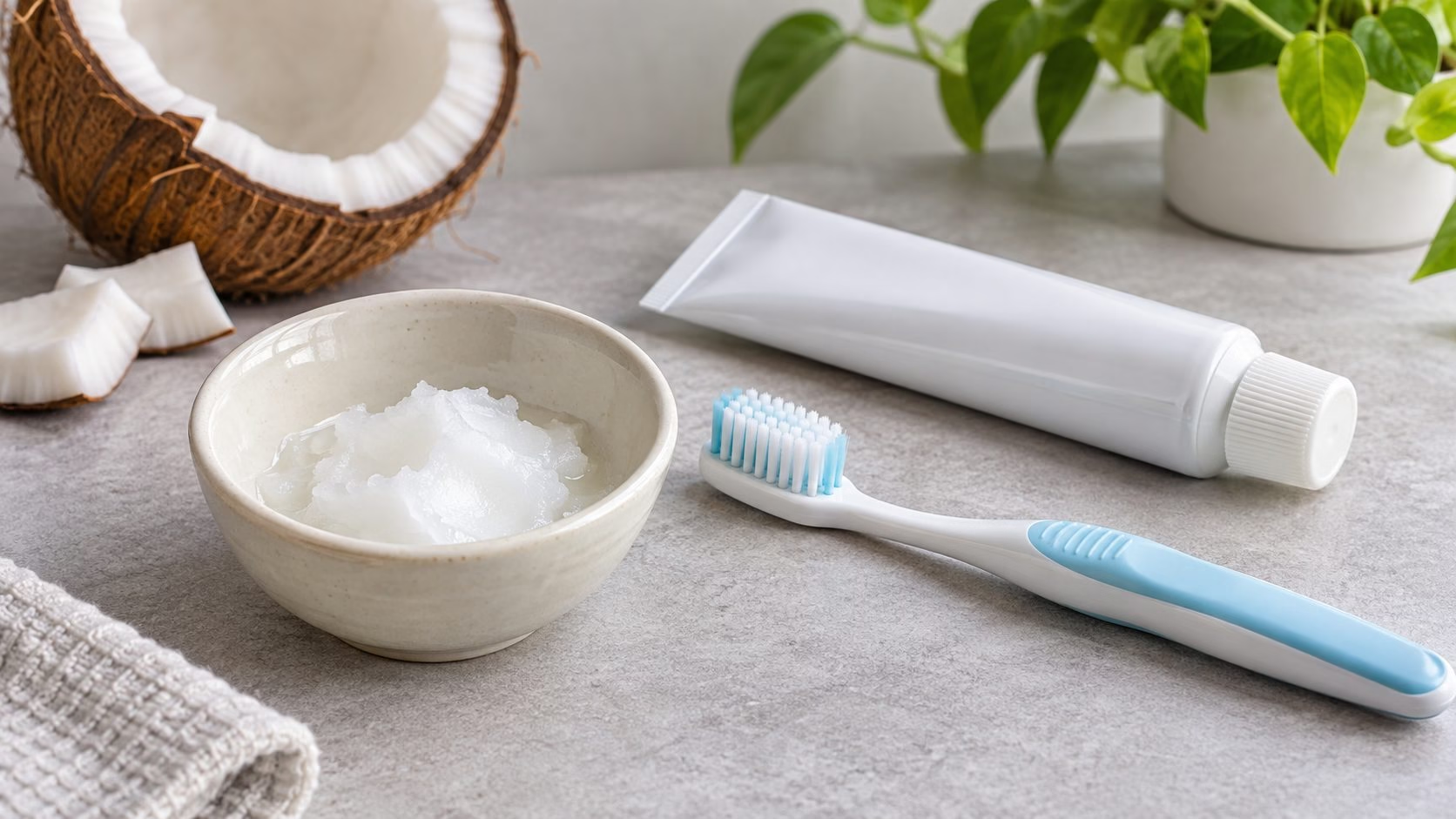
AI-generated illustration for educational purposes only.