

By Dr. Manish Pandey, BDS, Dental Surgeon
How to remove denture adhesive from gums: take the denture out gently, then wipe remaining adhesive from the gums and palate with damp gauze, a soft washcloth, or a wet soft-bristled toothbrush. Rinse your mouth afterward. Do not scrape delicate tissue with a sharp object or scrub until it hurts.
Adhesive can help some dentures feel more secure, but daily removal matters. The American Dental Association (ADA) advises cleaning adhesive from both the denture and the mouth each day. If your dentist gave special instructions for a new or immediate denture, follow those instructions instead of a general routine.
How to remove denture adhesive from gums step by step
- Loosen and remove the denture gently. Follow your dentist’s technique and the adhesive manufacturer’s directions. Do not pull hard against sore tissue; ask your dentist for help if the denture will not release comfortably.
- Moisten the residue. Rinse with water, then use damp gauze, tissue, or a soft washcloth to lift adhesive from the gums and palate. A wet soft-bristled toothbrush can help with stubborn film, using light pressure.
- Rinse and check the tissue. The mouth should feel clean, not raw. Stop if cleaning causes bleeding, significant pain, or an ulcer; arrange a dental assessment.
How do you remove adhesive from the denture itself?
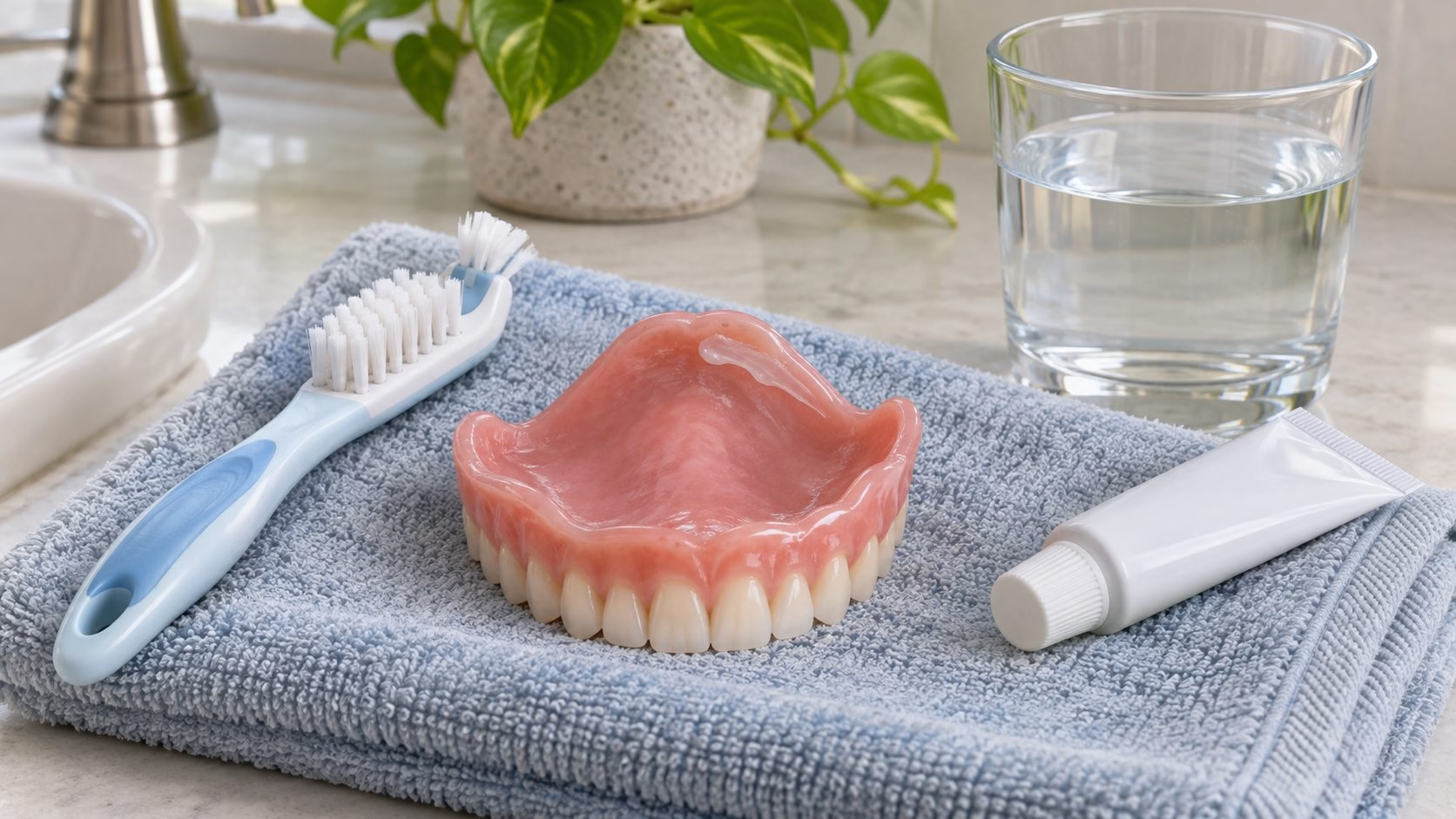
Hold the denture over a folded towel or a sink partly filled with water so a slip is less likely to break it. Use a soft denture brush and a denture cleanser or mild cleaning method recommended for your appliance, then rinse thoroughly before wearing it again. Avoid boiling water, harsh household chemicals, and abrasive scraping; these can damage the denture. Our denture-cleaning guide covers the broader daily routine.
Why is adhesive still stuck to my gums?
Some products leave a film, especially if a large amount was used. Use only the amount and application pattern on the product label. Frequent heavy residue, oozing adhesive, or increasing use may mean the denture fit or your technique needs review. Adhesive should not compensate for a denture that rocks, causes sores, or repeatedly comes loose. See our separate article on why denture adhesive may not hold for fitting and application problems.
When should you see a dentist?
Book an assessment if removing the denture or residue repeatedly hurts, the gums bleed, sores persist, the denture feels loose, or you need more adhesive than before. Changes in the supporting tissues are common over time, and a dentist can check whether an adjustment, reline, repair, or replacement is appropriate. Do not keep adding adhesive over a painful area.
Common questions
Can I leave denture adhesive on my gums overnight?
For routine daily care, remove the old adhesive from your mouth and denture each day. Follow your dentist’s individual instructions if your denture was placed immediately after an extraction or surgery.
Is a toothbrush safe for removing residue from the palate?
A wet, soft-bristled brush can help if used gently. Do not use a stiff brush or forceful scrubbing; damp gauze or a soft cloth may be more comfortable on tender tissue.
Dental disclaimer: This article is general education, not personal treatment advice. Ask your dentist about your specific denture and seek care for pain, bleeding, ulcers, or difficulty removing it.
References
- American College of Prosthodontists: Dentures FAQ.
- American Dental Association: Dentures.
- U.S. Food and Drug Administration: Denture adhesives.
AI-generated illustration for educational purposes only.