

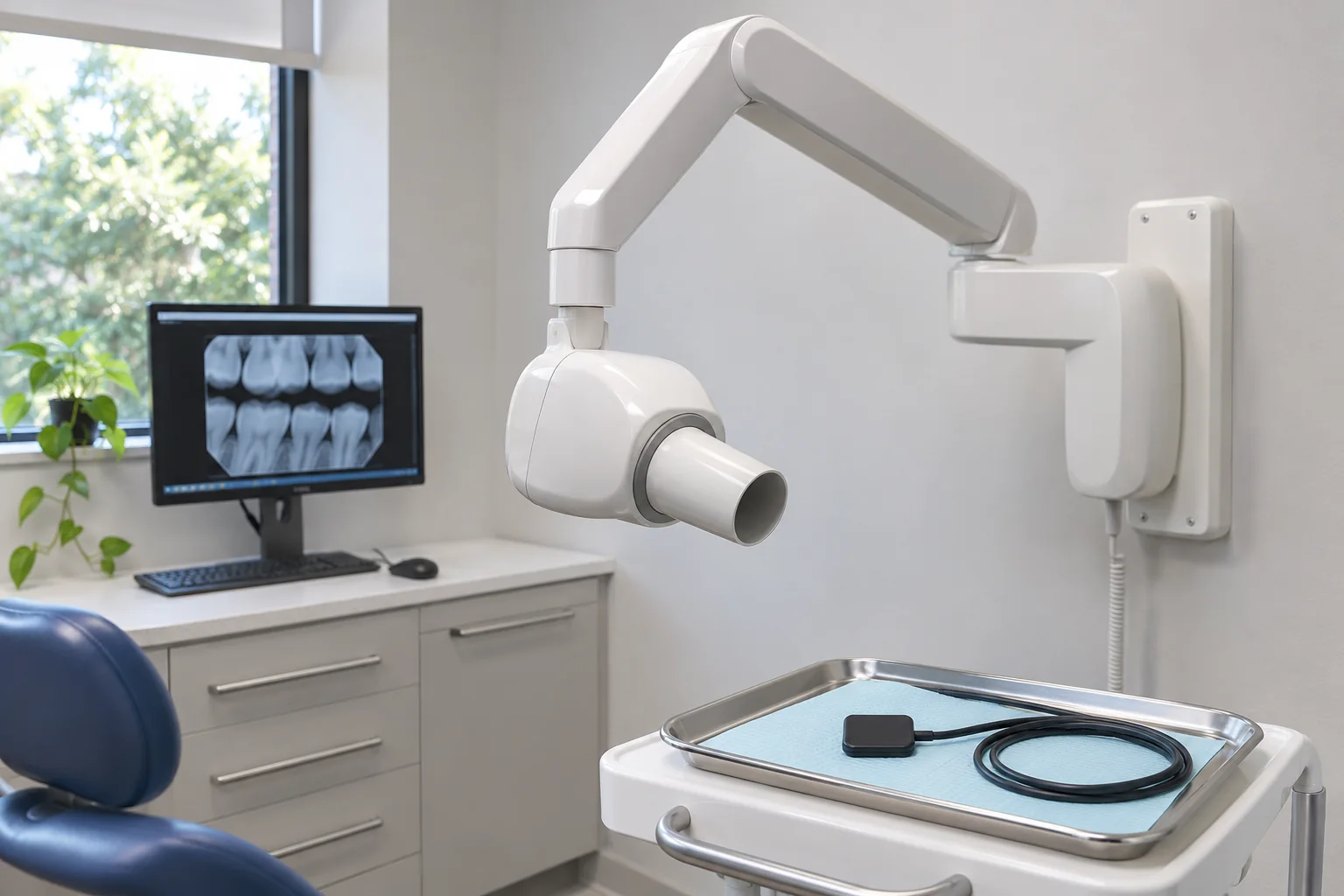
Do you need a lead apron for dental X-rays? Under current American Dental Association (ADA) guidance, routine abdominal aprons and thyroid collars are not recommended for patients receiving dental imaging, including children and pregnant patients. That does not mean every X-ray is automatic or risk-free. The first safety decision is whether an image is clinically needed; your dental team must also follow applicable local rules and the needs of your particular examination.
By Dr. Manish Pandey, BDS, Dental Surgeon
When is a lead apron for dental X-rays needed?
Older dental practices commonly used a lead apron or collar as a visible precaution. After reviewing the evidence, an ADA expert panel concluded in 2024 that routine patient shielding is unnecessary with contemporary dental radiography. A shield can also cover part of the area being imaged, making a repeat exposure necessary. The recommendation concerns patient shielding during dental imaging, not protective measures for dental staff who work around X-ray equipment.
What protects patients during dental X-rays instead?
Good imaging starts with a question: will this X-ray add information that changes diagnosis or treatment? The ADA’s current radiography guidance emphasizes an examination and patient-specific selection of images, using previous images when useful and limiting exposure while obtaining an image of diagnostic quality. Appropriate equipment, positioning and a beam restricted to the required area matter more than a routine apron.
Different dental images answer different questions. A small intraoral image and a cone-beam CT scan are not interchangeable. Your dentist should choose the imaging method that answers the clinical question, rather than order the same images for everyone. Our guide to dental CBCT scans explains when three-dimensional imaging may be useful.
Do children or pregnant patients need a lead apron?
The ADA’s patient-shielding recommendation applies regardless of age or pregnancy. It also says dental radiographs can be obtained during pregnancy when clinically indicated. Tell your dentist if you are pregnant or may be pregnant so the examination is planned appropriately. Do not postpone care for a painful or worsening dental problem merely because an apron is not offered. If you are uncertain about the reason for an image, ask what it will show and whether a recent image is already available. See our separate discussion of dental X-rays during pregnancy.
Why might one dental office still offer an apron?
Practice can differ by jurisdiction, local regulation, equipment, or a clinic’s protocol. A dentist may also need to adapt the imaging plan to an individual’s circumstances. The ADA recommendation is evidence-based guidance, not a substitute for local legal requirements. If a shield is offered, or is not offered, it is reasonable to ask the clinician to explain the decision.
What should you ask before a dental X-ray?
- What question will this image answer, and would it change my care?
- Are recent, usable dental images already available?
- Which type of image is needed, and why?
- Is there a local requirement or a patient-specific reason for shielding?
These questions support shared decision-making. They are not a reason to refuse a necessary image; sometimes a radiograph reveals a problem that cannot be seen in a visual examination.
Frequently asked questions
Does no apron mean the X-ray is unsafe?
No. The absence of a routine apron alone does not indicate unsafe imaging. Safety depends on a justified examination, suitable technique and following relevant regulations. Ask your dental team about your own situation.
Could an apron interfere with the image?
Yes. If shielding enters the primary X-ray beam, it can obscure the area the dentist needs to see and lead to a repeat image, as the ADA explains.
References
- American Dental Association: Updated Radiography Safety Recommendations
- American Dental Association: X-Rays/Radiographs
- American Dental Association: Pregnancy and Dental Care
Dental disclaimer: This article provides general education, primarily describing ADA guidance. It cannot determine whether you personally need imaging or shielding; your dentist should assess your needs and comply with local rules.