

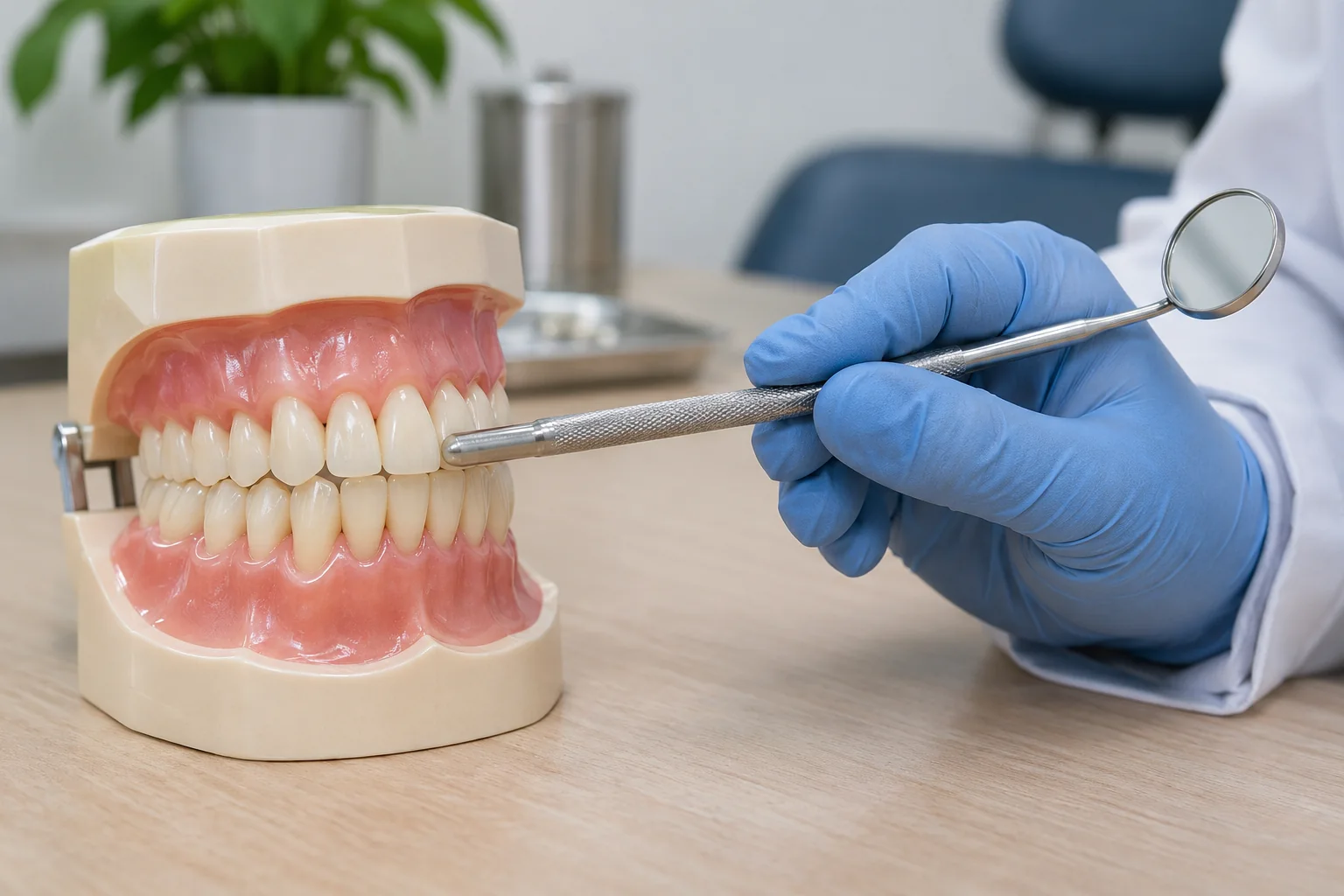
Why does a dentist tap your tooth? A gentle tap, called a percussion test, helps locate tenderness in the tissues supporting a tooth. It is one clue during an examination—not a diagnosis by itself, and not a test that proves the tooth nerve is alive or dead. Your dentist interprets it alongside your symptoms, other tests and, when needed, an X-ray.
By Dr. Manish Pandey, BDS, Dental Surgeon
Why does a dentist tap your tooth during an exam?
The dentist lightly touches or taps the biting edge of a tooth with the handle of a dental instrument, often comparing it with nearby teeth. The pressure briefly loads the ligament around the root. If one tooth feels markedly more tender, it may help identify where a problem is coming from. The American Association of Endodontists (AAE) diagnostic guidance describes percussion as one part of a broader assessment, not a stand-alone result.
What can a painful tooth percussion test mean?
Pain on tapping can occur when tissues around a root are inflamed, including in symptomatic apical periodontitis. But the AAE’s current periapical diagnostic table also notes that tenderness can have other explanations, such as recent trauma or a bite that is too high. Gum and supporting-tissue problems may contribute, too. A painful response does not automatically mean there is an abscess or that a root canal is needed.
Context matters. Did the tenderness begin after a new filling or crown? Is the tooth sensitive to cold, painful when chewing, loose, or surrounded by swollen gum? The answer can change which tests are most useful. If you recently injured a tooth, see our guide to tooth concussion; if a recent restoration feels uneven, read about a high bite and occlusal trauma symptoms.
What other tests might the dentist use?
The dentist may look for decay, a crack, gum swelling or a sore spot; compare tapping and bite pressure on several teeth; check the gums and tooth mobility; and test the tooth’s response to cold or another stimulus. A dental radiograph may be useful when it could change the diagnosis or treatment plan. No single test tells the whole story. For example, a tender tooth can still respond to cold, and an early problem may not be obvious on an X-ray.
Does the tap test hurt?
On a healthy tooth it is usually a brief, mild sensation. If a tooth is tender, even a light tap can feel uncomfortable. Tell your dentist immediately where and how it hurts; they can stop and adjust the exam. Do not repeatedly tap the tooth yourself to “check” it. Repeated pressure can increase soreness without revealing the cause.
When should you seek dental care?
Arrange a dental assessment if pain on biting or tapping persists, worsens, or comes with a broken tooth, swelling, or a recent injury. Seek urgent help for rapidly spreading facial swelling, fever with dental infection symptoms, or trouble swallowing or breathing. The goal is to identify the cause early rather than guess a treatment from one symptom.
Questions patients often ask
Does pain when a dentist taps my tooth mean I need a root canal?
No. It can be a sign of irritation around the root, but it can also follow trauma or an uneven bite. Your dentist needs the history, examination and other tests before recommending treatment.
If tapping does not hurt, is the tooth definitely healthy?
No. A painless percussion test does not rule out decay, a crack, pulp disease, or a developing problem. It only means that particular pressure test did not produce tenderness at that moment.
Why does my dentist tap a tooth after a filling?
They may be checking whether the tooth is tender and whether the bite feels different after the restoration. If the filling seems to contact first when you close your teeth, tell your dentist; it may need assessment or adjustment.
References
- American Association of Endodontists: Endodontic Diagnosis
- American Association of Endodontists: Periapical Diagnostic Terminology
- American Association of Endodontists: Systematic Pulpal Diagnosis
Dental disclaimer: This is general education, not a personal diagnosis. Only a clinician who examines your tooth can determine what the findings mean and what care is appropriate.