

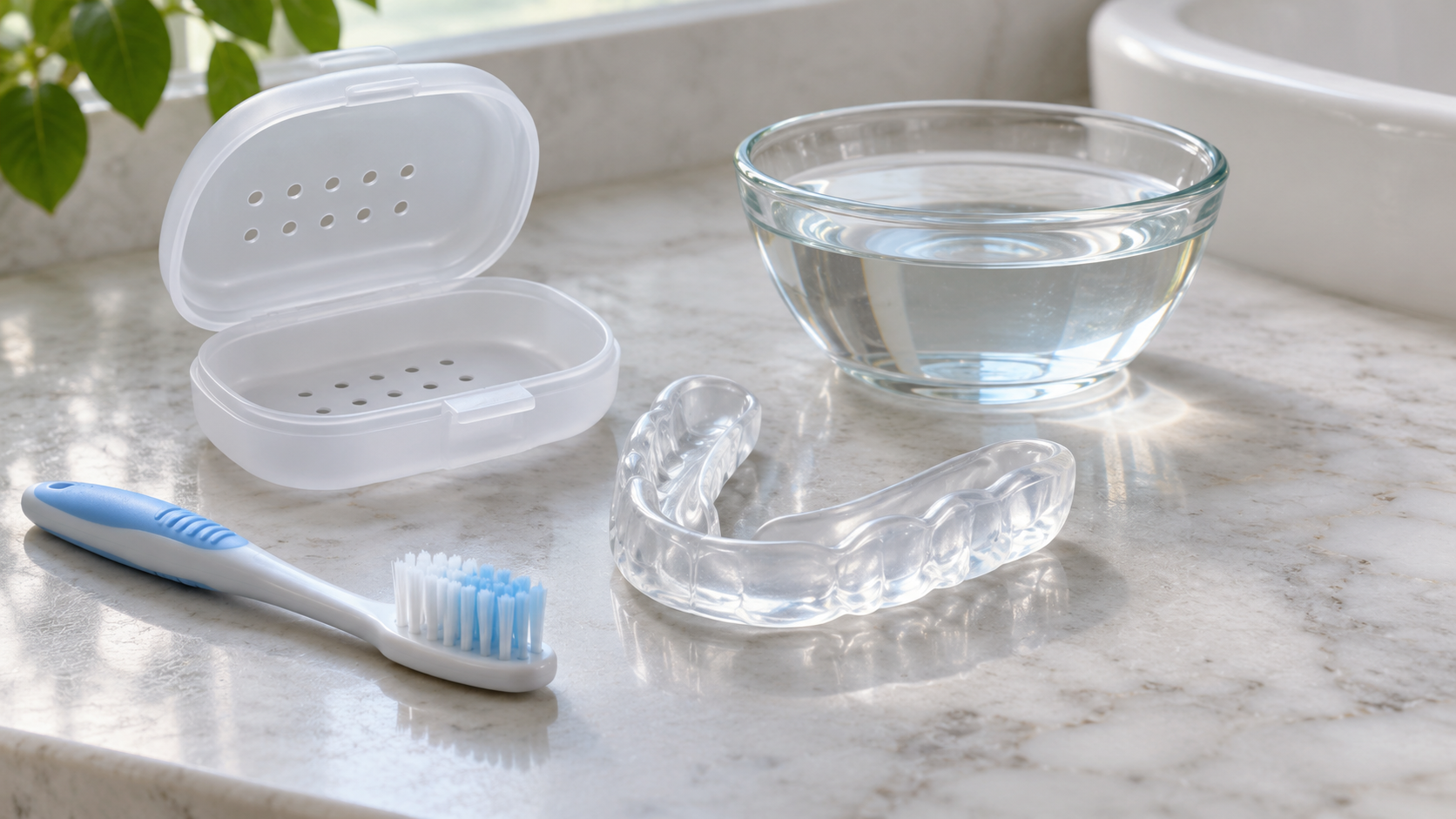
Quick answer: If you are wondering how to clean a sports mouthguard, rinse it with cool water after use, gently brush it with a soft toothbrush and a little mild liquid soap, rinse thoroughly, and let it air-dry before storing it in a clean, ventilated case. Avoid hot water, which can distort the fit.
By Dr. Manish Pandey, BDS, Dental Surgeon
How to clean a sports mouthguard after every practice
- Rinse promptly. Use cool running water to remove saliva and debris. Do this both before and after wearing the guard.
- Clean gently. Use a separate soft toothbrush and mild liquid soap. Brush the surfaces and grooves without scraping or using abrasive cleaners.
- Rinse away soap. Check the inner surface and edges carefully.
- Air-dry. Let the guard dry fully on a clean surface before placing it in a ventilated protective case.
- Clean the case. Wash and dry the case regularly, too; a clean guard stored in a dirty case will not stay clean.
The American Dental Association’s mouthguard guidance recommends cleaning with cool, soapy water and storing in a ventilated case. Follow any additional instructions from the dentist who made your guard, especially for a custom appliance.
Can hot water damage a sports mouthguard?
Yes. Hot or boiling water may warp a mouthguard, changing how it fits and protects your teeth. Avoid dishwashers and leaving it in direct sun or a hot car. Use cool water for routine care. If the guard seems distorted, do not try to reshape it yourself; ask your dentist to check it.
How should you store a mouthguard between games?
Place a fully dry mouthguard in a sturdy case with ventilation holes. Keep the case away from heat and out of reach of pets. Do not leave the guard loose in a sports bag, where it can pick up dirt or be crushed. Keep the case open while it dries after cleaning.
What should you avoid when cleaning it?
Do not use boiling water, abrasive powders, bleach, or a hard brush. They can damage the surface or change its shape. If your mouthguard has a persistent odor, stains, or deposits that gentle cleaning does not remove, ask your dental team which cleaning product is suitable for that particular material. Never share a mouthguard with another person.
When should you replace a mouthguard?
Have it checked if it cracks, develops rough edges, feels loose, causes sores, or no longer covers the teeth as intended. Growing children and teenagers may need fit checks more often. A sports mouthguard is different from a night guard for teeth grinding; each appliance has a distinct purpose and care plan. For help selecting the right type, see our guide to sports mouthguards for children.
Does a mouthguard worn with braces need different care?
The basic cleaning and drying steps are similar, but the fit deserves extra attention as teeth move. An orthodontist can advise on a guard designed for braces and check that it does not interfere with brackets or treatment. Do not adjust or trim it yourself.
What if a tooth is injured despite wearing a guard?
Stop play and seek prompt dental advice for a chipped, loose, displaced, or knocked-out tooth. A mouthguard reduces risk but cannot prevent every injury. Our dental emergency guide explains the immediate steps while you arrange care.
References
- American Dental Association: Mouthguards
- Dorset County Hospital NHS Foundation Trust: Caring for your mouth guard
- American Association of Orthodontists: Oral health tips for athletes
Dental disclaimer: This article is general educational information, not a diagnosis or a substitute for individual dental care. Ask your dentist about the fit and cleaning instructions for your specific mouthguard.
AI-generated illustration for educational purposes only.