Scalloped tongue causes and when to see a dentist are common questions when you notice small, tooth-shaped impressions along the sides of your tongue. The pattern usually means the tongue has been pressing against the teeth; it is not a diagnosis by itself. A new or persistent change deserves an oral examination, especially if there is pain, swelling or another symptom.
What does a scalloped tongue look like?
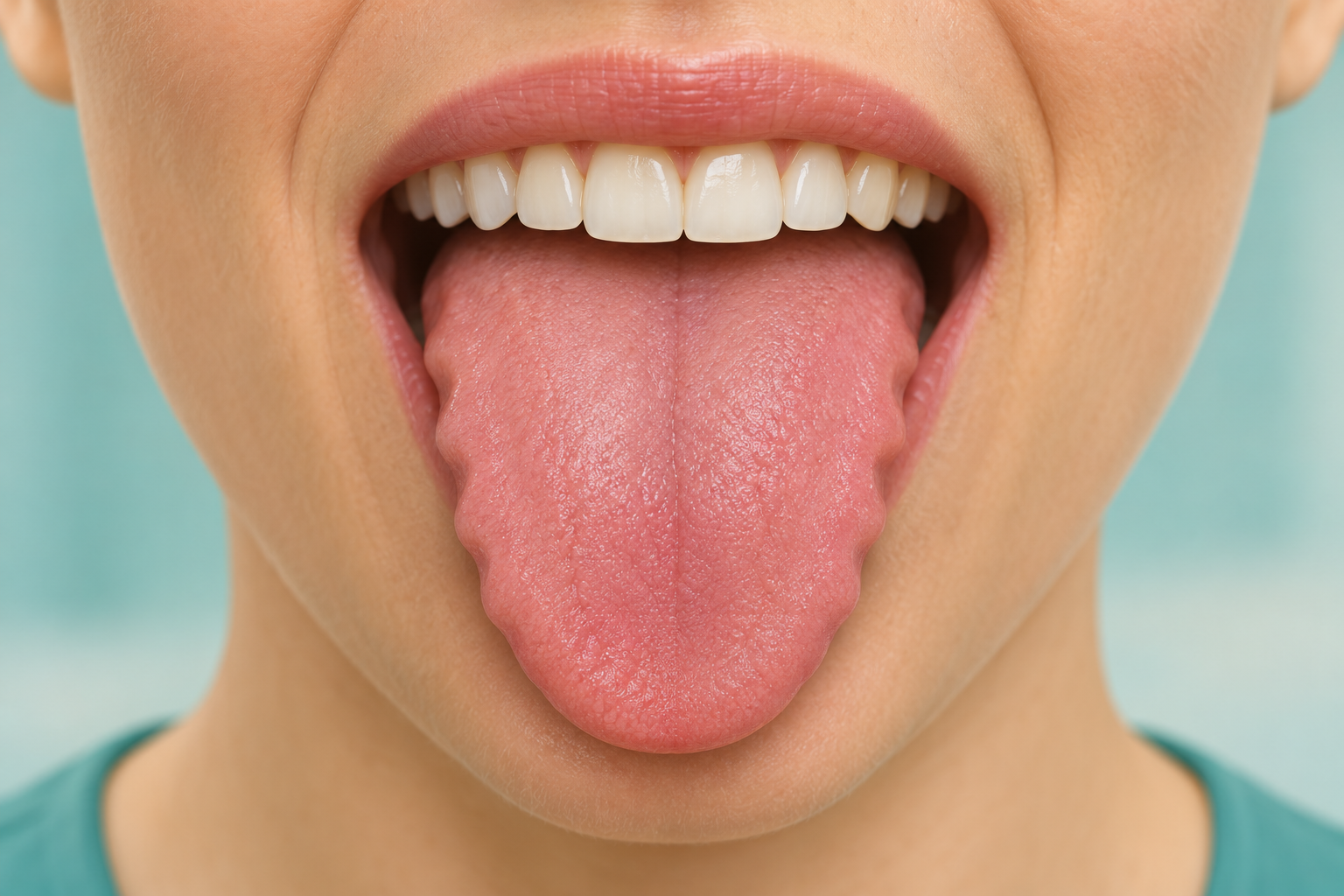
A scalloped tongue has a wavy outline or shallow indentations along one or both outer edges. The marks often follow the shape of the nearby teeth. They differ from grooves across the top of a fissured tongue and from the changing red patches of geographic tongue.
Scalloped tongue causes: why do tooth marks appear?
Short answer: the tongue edges are pressing against the teeth. Possible reasons include tongue posture or jaw clenching, or a change in tongue size due to swelling. The appearance alone cannot identify the cause.
Pressure and clenching
Some people press their tongue against the dental arches while awake or asleep. Jaw clenching or teeth grinding can coexist with this pressure. A dentist can look for wear, jaw tenderness and other clues, but tooth marks alone do not prove bruxism.
Swelling or a change in tongue size
Inflammation, an allergic reaction, an infection or certain general health conditions can change the tongue’s size. A clinician may ask about medicines, dry mouth, recent illness, fatigue and other symptoms. Do not diagnose a vitamin deficiency or thyroid condition from a tongue photo, or start supplements solely because the edges look scalloped.
Some clinical studies report an association between scalloping and obstructive sleep apnea, but scalloping is not a sleep-apnea test. If you snore loudly, wake gasping, or have substantial daytime sleepiness, tell a doctor. They can decide whether sleep testing is appropriate. A smooth tongue does not rule sleep apnea out either.
Can a scalloped tongue be harmless?
Yes. Mild, painless impressions may simply reflect contact with the teeth. What matters is whether the finding is new, worsening, uncomfortable or accompanied by other changes. A dentist can examine the tongue and mouth and decide whether medical assessment is needed. There is no reason to treat the appearance alone with a mouthguard, medication or supplements before identifying a cause.
When should you see a dentist or doctor?
- Arrange a dental assessment if the scalloping is new, persistent or concerning, or if you have soreness, a changing bite or signs of clenching.
- Seek prompt assessment for a persistent ulcer, red or white patch, unexplained lump, bleeding, or another mouth change lasting more than two weeks. Do not assume such findings are harmless scalloping.
- Seek emergency help for sudden tongue or throat swelling, especially with trouble breathing or swallowing. This differs from longstanding shallow tooth impressions.
What can you do while waiting for an appointment?
Take a clear photo in good light and note when you first noticed the change. Continue gentle oral hygiene and drink water regularly. Avoid repeatedly scraping, pressing or biting the tongue to test it. Mention jaw pain or morning headaches to your dentist if you suspect clenching. Do not change prescribed medicines on your own.
Frequently asked questions
Does a scalloped tongue mean I have sleep apnea?
No. It can be one clue in context, but sleep apnea requires a clinical assessment and, when indicated, sleep testing. Symptoms such as loud snoring, witnessed breathing pauses and excessive daytime sleepiness are important to discuss with a doctor.
Are tooth marks on the tongue the same as fissures?
No. Scalloping describes indentations along the side edges; fissures are grooves on the upper surface. They may coexist, but are not interchangeable diagnoses.
Will the marks disappear?
They may lessen if the underlying pressure or swelling resolves. The timeline varies. If the pattern persists or changes, ask a dentist to examine it rather than trying to remove the marks yourself.
Sources
- Cleveland Clinic: Scalloped Tongue (medically reviewed, 2025).
- Weiss and colleagues: Tongue scalloping and sleep pathology, Otolaryngology–Head and Neck Surgery (2005).
- American Dental Association: Dental Health Concerns—Adults Over 60 (oral changes lasting over two weeks).
- NHS 111 Wales: Angioedema (sudden tongue or throat swelling).
Byline: Dr. Manish Pandey, BDS, Dental Surgeon.
Dental disclaimer: This article is for education and cannot diagnose the cause of your tongue’s appearance. A dentist or medical professional can assess your symptoms in person. Seek urgent help for sudden swelling or breathing difficulty.