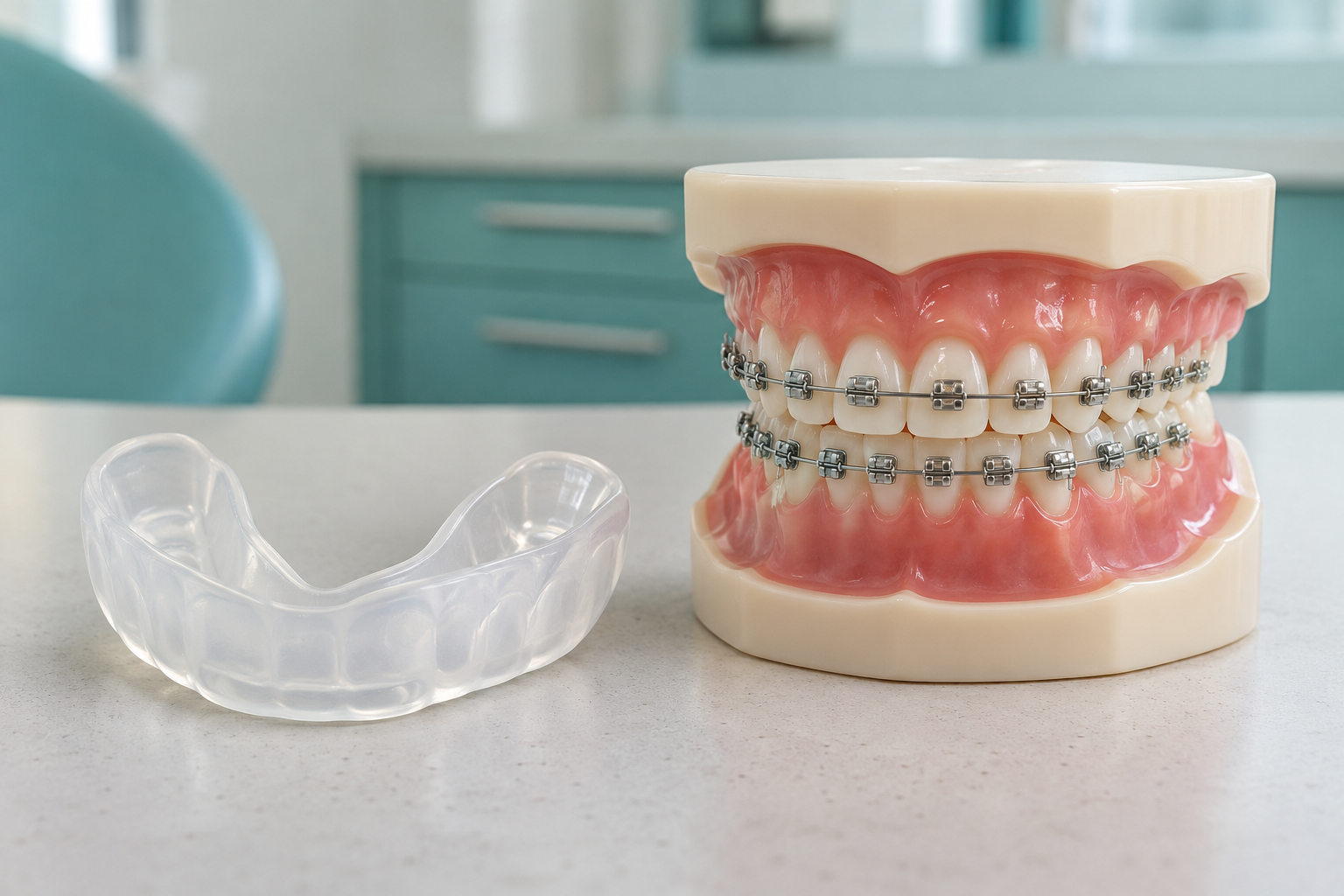
Can you play contact sports with braces? Usually, yes—but protect your teeth, lips and cheeks with a sports mouthguard that fits over your fixed braces. Ask your orthodontist which type suits your appliance and sport before you play. Braces do not replace a mouthguard, and a regular retainer or night guard is not a substitute.
Can you play contact sports with braces safely?
Fixed braces need not automatically keep you out of sport. The concern is an impact to the mouth: brackets and wires can injure the inside of the lips or cheeks as well as be damaged themselves. The American Dental Association recommends a properly fitted mouthguard and says people with braces may need advice about protection for both arches. University Hospitals Sussex NHS says to wear a mouthguard for contact sports with a fixed brace.
What kind of mouthguard works with fixed braces?
There is no single best guard for every athlete. A dentist or orthodontist can assess the brace, bite, sport and stage of tooth movement. A custom sports mouthguard may fit well, but moving teeth can mean it needs adjustment or replacement. Some mouldable sports guards can be adapted during orthodontic treatment; follow the product instructions and your orthodontist’s advice rather than forcing a tight guard over brackets. University Hospitals Plymouth NHS explains that a mouldable guard may need remoulding or replacement as braces treatment progresses.
Before a game, check that the guard covers the teeth and brace comfortably, stays in place and does not catch on a wire. If it no longer fits after an adjustment, stop using that guard and ask about a new fit. For children who do not have fixed braces, our separate guide to choosing a sports mouthguard covers the broader options.
What if you wear a removable brace or retainer?
Ask your orthodontist how to handle your specific appliance. The ADA advises against wearing a removable retainer or other removable appliance during contact sports. Put it in its protective case; do not wrap it in a tissue where it can be lost. Never remove a fixed brace yourself. If you use orthodontic headgear, follow the specialist’s sport-specific instructions.
What should you do after a blow to the mouth?
Take a break and check for bleeding, a chipped or displaced tooth, a loose bracket, or a wire cutting the cheek. Seek prompt dental advice for a damaged tooth or significant pain, and urgent care for heavy bleeding or a serious facial injury. A mouthguard lowers risk but cannot prevent every injury. If a bracket comes loose, see our loose braces bracket guide; contact your orthodontist for repair rather than trying to fix it yourself.
Frequently asked questions
Do braces make a mouthguard unnecessary?
No. Fixed braces can make soft-tissue injury more likely during an impact, and a suitable guard helps protect both the mouth and appliance.
Can I use my clear retainer as a sports mouthguard?
No. A retainer is designed to hold tooth position, not to provide the impact protection of a sports mouthguard. Ask your clinician for a guard that fits your treatment.
How often should I recheck the fit?
Check before each use and after orthodontic adjustments. Replace a damaged or ill-fitting guard. Our sports mouthguard cleaning guide explains routine care.
References
- American Dental Association: Mouthguards
- University Hospitals Sussex NHS Foundation Trust: Orthodontics
- University Hospitals Plymouth NHS Trust: Sports mouthguards
Dr. Manish Pandey, BDS, Dental Surgeon. This article is general dental education, not a substitute for individual orthodontic advice. Ask your treating clinician about mouthguard fit and seek prompt care after a dental injury.