By Dr. Manish Pandey, BDS, Dental Surgeon
Wondering how to use plaque disclosing tablets? Brush your teeth first, then use the tablet exactly as its label directs, spit and rinse, and look in a mirror for colour left on the teeth. The dye highlights dental plaque that your usual brushing missed. It is a way to check your technique—not a treatment or a substitute for brushing with fluoride toothpaste.
What do plaque disclosing tablets show?
Plaque is a sticky film of bacteria that collects on teeth, especially near the gumline and in areas that are hard to reach. Disclosing dye temporarily colours plaque so you can see where to focus your cleaning. The colour system varies by product: some use one colour, while some use two shades to distinguish plaque of different ages. Check the instructions for the particular tablet rather than assuming that every red or blue area means the same thing.
A tablet will not remove plaque for you. It also cannot tell whether you have a cavity, gum disease, or tartar. Hardened tartar needs professional removal.
How to use plaque disclosing tablets at home
- Choose a suitable time. Try it occasionally when you can use a mirror and clean up any dye. The product may stain lips, clothing, towels or a sink.
- Brush and clean between your teeth first. This makes the remaining colour a useful check of what you missed.
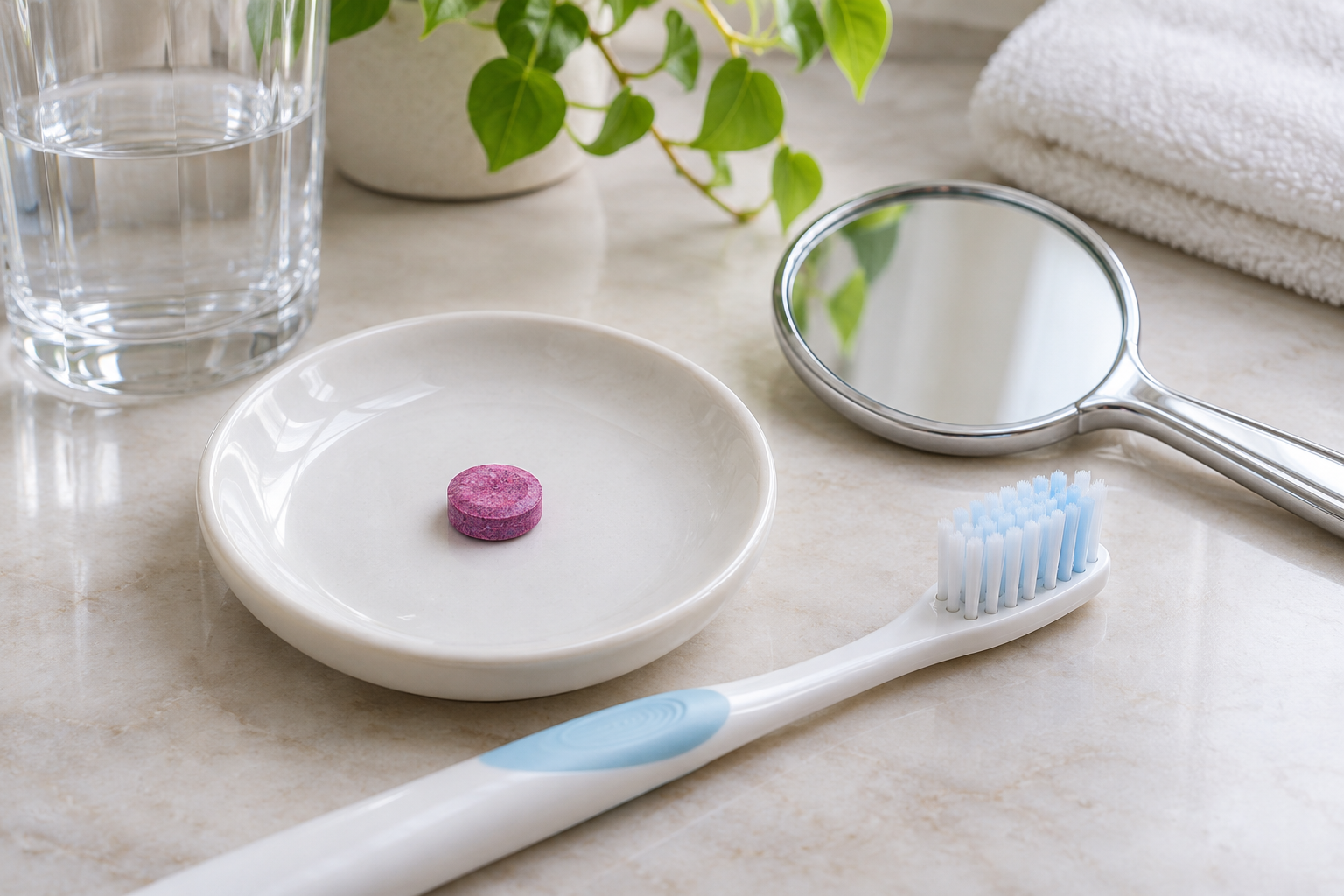
- Follow the packet instructions. Typically, you chew the tablet, move the coloured saliva over the teeth, spit it out and rinse gently. Do not swallow the tablet. Different brands may specify different times and rinsing steps.
- Look closely at the gumline and between teeth. Coloured areas show plaque still present. A mirror or help from a caregiver may make back teeth easier to inspect.
- Clean the coloured plaque gently. Brush the missed surfaces with a soft-bristled toothbrush; use a suitable interdental cleaner where appropriate. Do not scrub hard or force a brush into a tight space.
- Check again. If colour remains in the same place despite gentle cleaning, ask a dentist or hygienist to demonstrate a technique suited to that area.
Because the test involves rinsing, consider doing it separately from your final bedtime brush. Your everyday routine should still include twice-daily brushing with fluoride toothpaste. After a normal fluoride brushing session, spit out excess toothpaste rather than rinsing it all away.
Where should you look for missed plaque?
Check the edges where teeth meet the gums, the backs of the lower front teeth, and areas around braces or other dental work. A disclosing tablet can reveal a pattern, such as repeatedly missing one side of the mouth. Use that observation to improve technique, not to brush harder. If cleaning between teeth is uncomfortable, our interdental brush sizing guide explains why fit matters. Persistent gum bleeding deserves a dental check; see our guide to bleeding with an interdental brush.
Can children use plaque disclosing tablets?
They can help older children see missed areas, but an adult should supervise and follow the product’s age and safety instructions. The child must be able to chew, spit and rinse safely without swallowing the tablet. Do not use one with a very young child or anyone who could choke on it. Ask the child’s dental team if you are unsure whether a particular product is appropriate.
What if the dye does not come off?
First, brush the coloured areas gently and rinse as directed by the product. Temporary staining of the tongue, lips or sink can occur. Do not scrape teeth or gums with sharp objects or use abrasive substances to remove colour. If a patch on a tooth persists after the rest of the dye has cleared, arrange a dental examination rather than assuming it is plaque.
Common questions
Do plaque disclosing tablets remove plaque?
No. They colour plaque so you can see where to brush or clean between teeth. They do not replace a toothbrush, fluoride toothpaste, interdental cleaning or a professional assessment.
How often should I use them?
There is no need to use a tablet with every brushing session. An occasional technique check may be helpful, especially after your dentist or hygienist has shown you areas that are easy to miss. Follow the label and individual dental advice.
Do the colours diagnose gum disease?
No. The colours identify stained plaque according to that product’s instructions; they cannot diagnose the health of your gums. Bleeding, swelling or persistent discomfort should be assessed by a dental professional.
Dental disclaimer: This article is general education, not a personal diagnosis. Follow the instructions on your chosen product and ask your dentist or hygienist for advice tailored to your mouth, especially if you have dental appliances, a swallowing difficulty or persistent gum symptoms.
References
- Leeds Teaching Hospitals NHS Trust: How to use your disclosing tablets.
- Great Ormond Street Hospital: Tooth plaque.
- Leeds Teaching Hospitals NHS Trust: Keeping your child’s teeth healthy.
- American Dental Association: Oral health recommendations.
Featured image: AI-generated illustration for educational purposes only.