

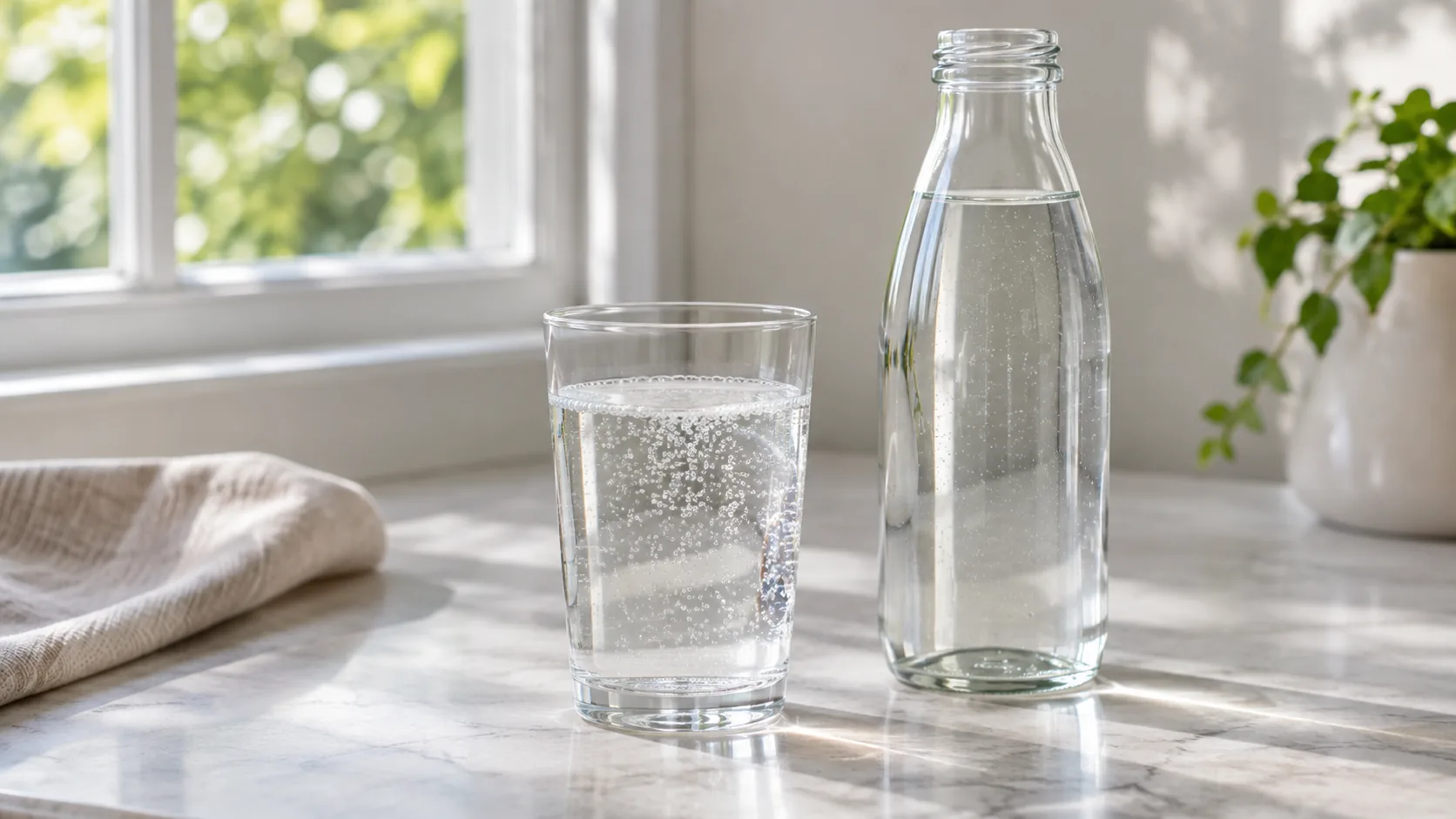
Is plain sparkling water bad for teeth? For most people, unsweetened, unflavored sparkling water is a reasonable alternative to sugary drinks. It is mildly acidic, but available research discussed by the American Dental Association (ADA) found little difference between plain sparkling and still water in one laboratory test. The ingredients and how often you sip matter more than the bubbles alone.
By Dr. Manish Pandey, BDS, Dental Surgeon
Is plain sparkling water bad for teeth compared with still water?
Plain water remains the simplest choice, especially if your local supply contains fluoride. The ADA’s patient guidance on sparkling water explains that plain sparkling water and still water had similar effects on enamel in an experiment using extracted teeth. That does not prove every drink or every drinking pattern is harmless. It does support a practical distinction: plain sparkling water is not the same as soda, a sweetened fizzy drink or citrus-flavored water.
What changes the dental risk?
Read the ingredient list rather than relying on the word “sparkling.” Added sugar provides fuel for plaque bacteria that make acids and contribute to cavities. Citrus flavoring or other added acids may increase the drink’s potential to wear enamel directly. This acid-related wear is called dental erosion; it is different from bacterial tooth decay, although both can affect the same mouth. The ADA reports laboratory evidence that flavored sparkling waters can cause more erosion than plain water, while sodas were more erosive in that study.
Frequency matters, too. Sipping an acidic drink throughout the day repeatedly exposes teeth. Having a flavored sparkling drink with a meal or in one sitting reduces that pattern of repeated exposure. If you already have erosion, dry mouth or significant sensitivity, ask your dentist what beverage choices fit your situation.
How can you enjoy sparkling water with less risk?
- Choose plain, unsweetened sparkling water most often; check for added sugar, citrus or acids.
- Drink still water regularly as well, preferably fluoridated water where it is safe and available.
- For acidic flavored drinks, avoid swishing or slowly sipping for hours; have them with a meal if you choose them.
- Rinse with plain water after an acidic drink. Do not scrub teeth immediately after a strongly acidic drink; allow saliva time to recover.
These are ways to reduce exposure, not a claim that a straw or a rinse can cancel out every dietary habit. Our guide to protecting teeth from acidic drinks explains the broader approach, while our enamel-erosion guide explains what to watch for.
What if your teeth feel sensitive after fizzy drinks?
Sensitivity can have several causes, including exposed dentin, cavities or erosion. Do not assume sparkling water alone caused it. Note which drinks trigger symptoms, whether pain lingers, and whether you see new wear or discoloration. Arrange a dental examination if sensitivity is persistent, worsening or localized to one tooth. A clinician can examine enamel, gums, restorations and your full diet before recommending changes.
Questions patients ask
Does carbonation itself cause cavities?
No. Carbonation does not feed cavity-causing bacteria the way added sugar does. Plain sparkling water is still mildly acidic, so it is sensible to distinguish it from sweetened or heavily flavored products.
Is flavored sparkling water the same as plain sparkling water?
Not necessarily. Citrus and added acids can change the erosive potential; sweeteners and sugars also vary. Read the label and consider how frequently you drink it.
Should I stop drinking plain sparkling water?
Usually there is no need to avoid it completely if you enjoy it and your dentist has not advised otherwise. Still water is the best default, and your own dental risk and drinking pattern matter.
References
- American Dental Association MouthHealthy: The Truth About Sparkling Water and Your Teeth
- American Dental Association: Acidic Sugar-Free Beverages and Enamel
- American Dental Association: Dental Erosion
Dental disclaimer: This article gives general information, not an individualized diagnosis or dietary prescription. Ask your dentist about persistent sensitivity, visible tooth wear, dry mouth or your personal risk.