

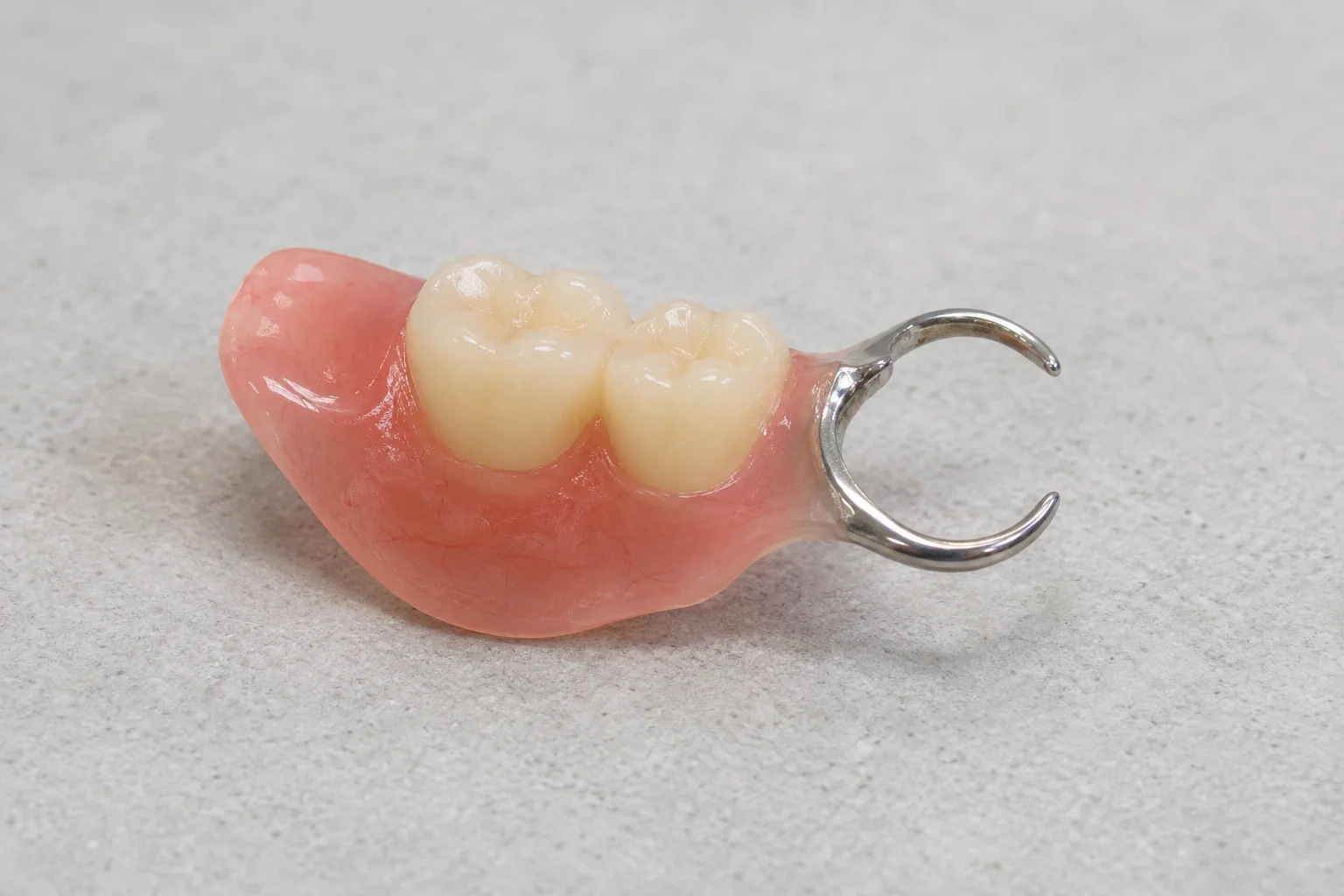
A loose partial denture clasp can make your removable denture lift, rock or slip. Do not try to tighten the metal yourself. Remove the denture if it is painful or unstable, keep it safe, and arrange a dental assessment. The dentist needs to check both the clasp and the teeth and gums supporting it.
By Dr. Manish Pandey, BDS, Dental Surgeon
What should you do when a partial denture clasp feels loose?
First, take the denture out gently and look for obvious food debris, a crack or a missing piece. Clean it as your dentist instructed, then try seating it with your fingers. It should fit without forcing it. The American Dental Association (ADA) advises against biting a partial into place because that can bend or break its clasps. If it still rocks or slips, book a dental visit rather than repeatedly forcing it in.
If the denture has a sharp edge, causes a sore area, or might come out while eating or speaking, leave it out until your dental team advises you. Store it safely according to the instructions for your particular denture. If a clasp or another part has broken off, take the appliance and any pieces to the appointment; do not glue them back together.
Why can a partial denture become loose?
The clasp may no longer engage the supporting tooth as intended, but that is not the only possibility. The gum and jawbone beneath a denture can change shape, especially during healing after an extraction. The fit may also change if a supporting tooth, filling or crown has changed. The NHS notes that dentures can loosen as the mouth changes over time. A dentist can tell whether the problem is the clasp, the denture base, the bite or a tooth that needs care.
Can you bend a loose partial denture clasp back at home?
No. Bending a clasp by hand or with pliers can distort or break it and may make the denture fit worse. Do not use a DIY repair kit, household glue or extra adhesive to hide a poor fit. The ADA recommends professional adjustment of dentures that no longer fit, and Leeds Teaching Hospitals NHS Trust specifically advises patients not to adjust or repair a partial denture themselves.
What will the dentist check?
The dental team can inspect the clasp and framework, check how the denture seats, look for pressure spots, and examine the natural teeth it grips. Depending on the cause and the denture design, the solution may be an adjustment, repair, reline or replacement. A newly fitted immediate partial may need follow-up as the tissues heal. There is no safe one-size-fits-all way to tighten every clasp.
When should you seek help sooner?
Contact a dentist promptly if the denture breaks, a supporting tooth feels loose or painful, the gum is very sore or bleeding, or the appliance will not stay in place. Seek urgent medical help if you have difficulty breathing or swallowing; do not continue wearing an unstable removable appliance in that situation. The NHS also advises a dental review for dentures that slip, hurt, or are damaged.
How can you help prevent another fit problem?
Handle the partial gently and never bite it into position. Keep the appliance and remaining teeth clean, and attend regular dental reviews so changes in fit or supporting teeth are found early. For a separate guide to routine cleaning, read our denture-cleaning article. If food is repeatedly getting beneath the appliance, our guide to food getting under dentures explains why a fit check may be needed.
Frequently asked questions
Will denture adhesive fix a loose clasp?
Adhesive does not repair a clasp or correct a denture that fits poorly. Ask your dentist whether any adhesive is appropriate for your particular partial. The ADA’s denture-care guidance says adhesive is not a remedy for an ill-fitting denture.
Should I keep wearing the partial until my appointment?
If it stays securely in place and does not hurt, ask your dental team for advice based on your situation. If it slips, has a sharp or broken piece, or causes pain, leave it out and seek assessment. Do not force it in.
References
- American Dental Association: Partial Dentures
- Leeds Teaching Hospitals NHS Trust: Removable Partial Dentures
- NHS: Dentures
- American Dental Association: Denture Care and Maintenance
Dental disclaimer: This article is for education and cannot diagnose the cause of a loose denture. A dentist must examine your mouth and appliance before recommending an adjustment or repair.