


Do you feel a sudden sharp pain in your teeth when you drink cold water, eat ice cream, or even brush your teeth?
If yes, you’re not alone. Tooth sensitivity affects 1 in 3 adults worldwide, and one of the most commonly recommended solutions is sensitivity toothpaste.
But the real question is:
Does sensitivity toothpaste actually work, or is it just a marketing trick?
Let’s break it down in a friendly yet expert-driven way so you know exactly what works, what doesn’t, and how to use it correctly for results.
What is Tooth Sensitivity?
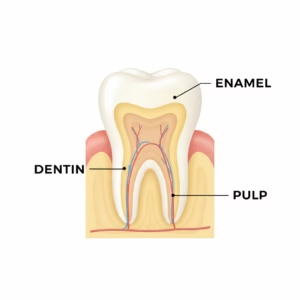
Tooth sensitivity occurs when the inner layer of the tooth (dentin) gets exposed.
Dentin has tiny tubules connected to the nerve. When exposed, cold, hot, sweet, or touch can trigger sudden pain.
Common Causes of Sensitive Teeth:
| Cause | Why It Triggers Sensitivity |
|---|---|
| Enamel Wear | Exposes dentin to external stimuli |
| Gum Recession | Roots get exposed (no enamel on roots) |
| Teeth Grinding | Wears down enamel |
| Aggressive Brushing | Damages enamel + pushes gums down |
| Acidic Foods/Drinks | Softens and erodes enamel |
| Teeth Whitening | Temporary dentin exposure & irritation |
How Does Sensitivity Toothpaste Work?
Sensitivity toothpaste is not a painkiller—it treats the root cause of sensitivity.
It works in either of two scientific ways:
1. Blocks the Pain Signals (Nerve-Calming Formula)
Ingredients like Potassium Nitrate help calm the nerves inside the tooth.
It reduces sensitivity by blocking pain signals to the nerve.
Time to feel results: 2–4 weeks of regular use
2. Builds a Protective Shield Over Exposed Dentin
Ingredients like Stannous Fluoride or Arginine block the exposed dentin tubules and protect your tooth from triggers.
Works like: Sealing the tiny pores so cold/hot can’t reach the nerve
Time to feel results: Some give relief in a few uses; long-term protection in weeks
Key Ingredients in Sensitivity Toothpaste (Know What to Look For)
| Ingredient | How It Helps | Good For |
|---|---|---|
| Potassium Nitrate (5%) | Desensitizes nerve endings | Persistent sensitivity |
| Stannous Fluoride (0.454%) | Blocks tubules + fights decay + antibacterial | Sensitivity + cavities |
| Sodium Fluoride (0.24%) | Strengthens enamel | General enamel protection |
| Arginine (8%) | Blocks dentinal tubules | Instant + lasting relief |
| Hydroxyapatite (HAp) | Rebuilds enamel (biomimetic) | Natural, fluoride-free option |
| Novamin (Calcium Sodium Phosphosilicate) | Forms protective mineral layer | Enamel repair |
Tip: Choose a fluoride toothpaste with a desensitizing active ingredient appropriate for you. Stannous fluoride can help both sensitivity and cavity prevention, but product suitability varies.
Benefits of Sensitivity Toothpaste
- Reduces tooth sensitivity to cold, hot, sweet, and touch
- Helps rebuild enamel (depending on the formula)
- Prevents further sensitivity when used long-term
- Protects exposed dentin tubules
- Some offer additional benefits like whitening or cavity protection
Does Sensitivity Toothpaste Work? The Honest Answer
Yes — but only if used correctly and consistently.
It’s scientifically proven and recommended by dentists worldwide.
However, results depend on:
Choosing the right toothpaste
Using it twice daily
Not rinsing immediately after brushing (very important!)
Giving it enough time (minimum 2–4 weeks)
When It Won’t Work:
- You use it on and off
- You rinse your mouth immediately after brushing
- The cause is not general sensitivity but a dental issue like:
- Cavity
- Fractured tooth
- Gum disease
- Worn-out fillings
In such cases, no toothpaste will solve it — treatment is required.
How to Use Sensitivity Toothpaste the Right Way
Most people use it wrong, which is why they don’t see results. Here’s the correct method:
Use It Like This:
- Brush with a pea-sized amount of sensitivity toothpaste
- Brush gently for 2 minutes
- Do NOT rinse your mouth with water
- Spit excess foam only
- Do not eat/drink for 30 minutes
Use the toothpaste exactly as directed on its label. Do not leave a product on a tooth overnight unless the manufacturer’s instructions or your dentist specifically recommends that use.
Sensitivity Toothpaste vs Normal Toothpaste: Quick Comparison
| Feature | Normal Toothpaste | Sensitivity Toothpaste |
|---|---|---|
| Reduces Sensitivity | ✖ | ✔ |
| Strengthens Enamel | ✔ | ✔✔ |
| Cavity Protection | ✔ | ✔✔ (if fluoride) |
| Fast Relief | ✖ | ✔ (depends on formula) |
| Long-Term Protection | ✖ | ✔ |
Who Should Use Sensitivity Toothpaste?
Recommended for people who:
- Experience discomfort with cold, hot, or sweet food/drinks
- Have worn enamel or gum recession
- Recently underwent teeth whitening
- Have sensitivity after dental cleaning (temporary)
Avoid without dentist advice if:
- You have painful sensitivity with swelling
- Sensitivity is only on one tooth — this usually needs treatment
Best Practices to Prevent Sensitivity (Along with Toothpaste)
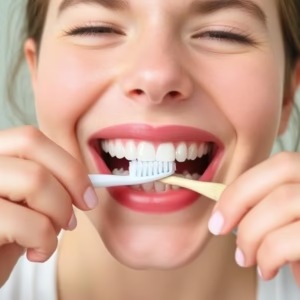
- Use a soft-bristled toothbrush
- Don’t brush aggressively
- Reduce acidic foods (cola, citrus, vinegar)
- Use a fluoride or hydroxyapatite toothpaste
- Wear a night guard if you grind teeth
FAQs
1. How long should I use sensitivity toothpaste?
Improvement may take several days to a few weeks depending on the active ingredient and cause. Use it consistently as directed, and arrange a dental examination if symptoms persist, worsen or affect one particular tooth.
2. Can I use sensitivity toothpaste daily?
Most over-the-counter sensitivity toothpastes are intended for regular use when used according to the label. Ask a dentist about suitability for children, allergies, mouth irritation or ongoing symptoms.
3. Can I use it with whitening toothpaste?
Some whitening toothpastes are relatively abrasive and may aggravate symptoms. Choose a gentle fluoride formula and ask your dentist before alternating products if sensitivity continues.
4. Is fluoride-free sensitivity toothpaste effective?
Some fluoride-free products contain hydroxyapatite, while calcium sodium phosphosilicate is used in certain desensitizing formulas. Evidence and regulatory availability vary; fluoride remains important for cavity prevention, so discuss fluoride-free choices with your dentist.
5. What if sensitivity toothpaste doesn’t help?
Consult a dentist — you may need professional treatment such as bonding, varnish, or gum treatment.
Related SmilesCare guides
- “Teeth Whitening: Myths vs Facts”
- “Why You Should Never Ignore Bleeding Gums”
- “What Your Tongue Says About Your Health”
Medically reviewed by Dr. Manish Pandey, BDS. This article provides general education and does not replace a dental examination, especially for new, severe or one-sided sensitivity.
Clinical references
- ADA (American Dental Association)
- Mayo Clinic – Sensitive Teeth
- Systematic review: desensitizing toothpastes for dentin hypersensitivity
Final Takeaway
Desensitizing toothpaste can reduce dentin hypersensitivity when the active ingredient matches the problem and the product is used consistently. It cannot rebuild lost enamel or treat decay, cracks, gum disease or an infected tooth.
If used correctly, it can significantly reduce discomfort and improve your daily life.
However, if sensitivity is due to a dental issue, no toothpaste can fix it — a dentist must treat the underlying cause.